

Topic: ageism awareness

“The first myth is that old age is a disease, a terrible disease that you never admit you’ve got, so you lie about your age. Well, it’s not a disease—it’s a triumph. Because you’ve survived. Failure, disappointment, sickness, loss—you’re still here.”— Gray Panthers founder Maggie Kuhn
Words have power. They influence how we think and act. They can create labels, misperceptions, and misrepresentations. They can also shape our understanding in meaningful and positive ways. …

People over age 65 exhibit a vast range of abilities both mental and physical. Unfortunately, ageism (the negative stereotyping of older adults) links advancing years with decline in a manner that disregards individual capability. From degrading birthday cards to discrimination in the workplace, 82% of older adults report experiencing ageism in their everyday life.
Most insidious is internalized ageism, when we look down on ourselves, often without realizing it. Blaming age when we can’t remember a word (“a senior moment”). Feeling flattered when we’re told “You don’t look [your age]!” Not considering an interesting activity at the senior center because we “don’t want to be around all those old people.”
It turns out such negative age beliefs can significantly reduce life expectancy. Multiple studies across many years and many cultures have shown that people with negative beliefs about aging die as many as seven and a half years earlier than those with positive age beliefs. (The studies accounted for the influences of income, education, and health status.) …
“Aging is not lost youth but a new stage of opportunity and strength.” ~Betty Friedan
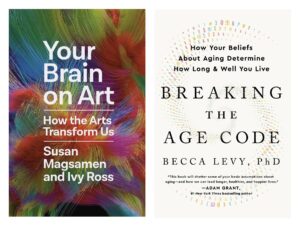
Our team at Aging Wisdom are avid readers. It’s not uncommon for us to routinely share books, ideas that have sprung from reading, or to attend author events for that extra infusion of inspiration.
Reading, discussing, and brainstorming affirms our work as Care Managers and Creative Engagement Specialists. We also discover new ways to support clients in navigating options for living, caring, and aging well. …
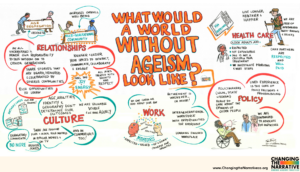
Ageism is one of the most widespread and socially accepted forms of prejudice. As defined by the World Health Organization, ageism is “the stereotypes (how we think), prejudice (how we feel) and discrimination (how we act) towards others or oneself based on age.” …