


Using medications and supplements appropriately optimizes their efficacy. Taking them as prescribed also helps avoid unwanted side effects and interactions.
Whether you’re managing prescriptions, over-the-counter medications, or herbal remedies for yourself or an older adult in your care, these four tips will help you manage medications properly and optimize safety.
Why is attention to medication safety so important as we get older? According to Dr. Abby Winter, Assistant Director for Outreach, Plein Center for Geriatric Pharmacy Research, Education and Outreach at the University of Washington, “We know that older adults are the highest consumers of medications. As we age, changes in our bodies also affect how medications may work for us. Using medications safely is extremely important.”
Tip One: Take Medicine as Prescribed
To maximize the effectiveness of prescribed medications, take them according to your health care provider’s instructions. The Centers for Disease Control and Prevention estimates that 125,000 deaths occur every year in the U.S. because of medicines not being taken correctly.
Don’t skip doses or stop taking medications without first consulting your provider. For example, antibiotics require the full course of treatment to be effective, even though you may be feeling better before the regimen is complete.
It’s especially important to NOT take prescription medications that have been prescribed to someone else. Taking unprescribed medications can lead to serious drug reactions and unexpected side effects.
Could you benefit from help with medication management? Ask your pharmacist, physician, or Care Manager for assistance. They may be able to order prefilled pill packets. Other management options include: an automated pill dispenser; handheld timer; medication manager app on your smartphone; there are also pill bottle caps with timers.
Tip Two: Be Aware of Side Effects and Possible Medication Interactions
It may feel burdensome to read the medication guide information or drug facts labels that comes with your medications, but it’s important to understand that taking them, whether prescribed or over-the-counter (OTC), may come with potential side effects. Take note, as well, of special instructions provided by your health care provider or pharmacist.
Interactions may occur when:
- Alcohol and non-alcoholic drinks as well as certain foods may react with your medication.
- For example: some medications take with alcohol make cause memory issues, loss of coordination, and sleepiness, and you could risk a fall.
- Grapefruit juice can affect a medication’s efficacy and cause dangerous side effects.
- A health condition makes a certain medication potentially harmful.
- For example: Nitroglycerin, which treats angina, should not be taken with many erectile dysfunction medications (such as Viagra and Cialis), as serious interactions can occur.
- An herbal supplement interferes with the effectiveness of another medication.
- The following things can also affect medications: caffeine; nicotine use; diet; changes in medical conditions, illness, and infections.
Some medications may have side effects that imitate other health conditions, such as memory problems, drowsiness, and dizziness. If you experience new health problems as a result of a new medication, ask your health care provider if they could be due to the medication.
Tip Three: Store Medicines Properly; Check Expiration Dates
Understanding proper storage of your medication is another good reason to read medication guide information and drug facts labels. Storage can also affect safety and effectiveness.
Some medicines must be stored in the refrigerator, others away from high heat such as kitchen appliances, or in bathrooms, where room temperatures and humidity can fluctuate widely.
Secure your medicines. Special care should be taken to keep all medicines away from children, to minimize the risk of accidental poisoning. Your Care Manager or pharmacist can help you with how to safely store your medicines.
If your medication is expired, do not use it. It is not unusual to have expired prescription and OTC medications in our homes. Check expiration dates and properly dispose of expired medications. Expired medications may present potential harm and not provide the intended benefit. Additionally, when medicine degrades, it may yield toxic compounds that cause unwanted side effects.
Here are some effective solutions for reviewing and disposing of expired and unused medicine:
- October 21 is National Check Your Meds Day
- October 28 is National Prescription Drug Take Back Day
- Where and How to Dispose of Unused Medicines (U.S. FDA webpage)
Tip Four: Keep an Updated Medication List
Maintain a medication list. Keep it up to date. Share a copy with someone you trust – this is especially important in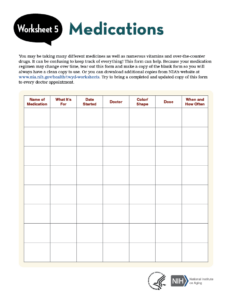 case of an emergency or hospitalization. If you use a smart phone, you can save the list on an electronic note function or in an app.
You may find this Medication List worksheet from the National Institutes on Aging helpful.
If you work with one of our Care Managers, they can also help you create and maintain a list with the details suggested, below.
What should your medication list include?
- All your prescriptions by brand name
- Any over-the-counter medicines, herbal supplements or preparations you’re taking
- The dosage for each and how often you’re taking them
- Why you’re taking or have been prescribed the medication/s
- The names and contact information of the pharmacy/ies that filled your prescription/s
If you have multiple health care providers, share your medication list with each provider so they are aware of all your prescriptions, medications, and supplements.
Let your health care provider know if you find a medication isn’t working effectively. If a medication is not relieving pain, for example, let your provider know.
A medication review can help you increase medications’ effectiveness, avoid medication interactions, reduce your risk for side effects, and lessen costs.
“Utilize your care team and the experts to help you ensure you’re using your medications safely. Even if you don’t have specific questions, chances are a pharmacist may be able to optimize your regimen! Don’t be afraid to ask questions,” Dr. Winter encourages.
Overwhelmed by the medications you are managing for yourself or someone in your care? Concerned about side effects and possible drug interactions? We can help. CLICK HERE to schedule a call with one of our Certified Care Managers.