

Topic: age in place

You probably already have some “smart” features in your home.
For instance, a thermostat you can program for a higher temp during the day and lower at night. Perhaps it has remote capabilities, so you can make changes from afar.
Or sensors, such as garden sprinklers that shut off when it’s raining, or outdoor lights with motion detectors. …

Caring for someone living with Alzheimer’s, another dementia, or Parkinson’s, whether it’s a spouse or parent, can be stressful, and at times, overwhelming, even on a good day. Too much stress can be harmful to you both. It’s also not uncommon for family caregivers to be so concerned with the needs of the person in their care that they lose sight of their own well-being. …

Cohousing is like a retirement community in that it is a group of residents in individual, private domiciles. Plus, there are shared facilities for group activities. What’s different is that retirement communities are created and run by a developer.
Cohousing communities are created by the people who will live in the buildings. All members hold an equal investment—personal and financial—in the process of creating and running the community. Decision making is shared and is usually by consensus. …

Last week we looked at tips for navigating long-term care options to support living at home. Successfully managing care at home depends on many factors, including finances, health status, transportation, mobility, a supportive physical environment, a willingness to accept care, and having a realistic view of the care needs.
There may come a point when the person in your care can no longer be safely and adequately cared for at home. For example, when your parent has a progressive health condition such as Alzheimer’s disease or Parkinson’s, there may come a time when the care needed at home exceeds your capacity to support them safely.
Be prepared for this reality; it’s never too early to research, visit, and reflect in preparation for a possible move. It’s always best to be proactive. …
Navigating Long-Term Care Options (in greater Seattle) Part IIRead More »

We are living longer. According to the U.S. Census Bureau, those who are 85 and older are the fastest growing segment of the population. As a result, more adult children than ever are helping their parents navigate their journey with aging.
Finding appropriate supports and helping guide your parents’ choices when additional care is needed can be overwhelming. Do an online search for in-home, professional caregiving services and the results are endless. Everyone looks and sounds the same.
How can you be confident that they’ll provide safe, respectful, dependable care? Will they support your parents’ autonomy and independence, while enhancing their well-being? Is this financially sustainable? Where do you start? …
Navigating Long-Term Care Options (in greater Seattle) Part IRead More »
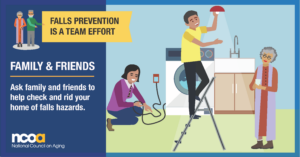
It’s Falls Prevention Awareness Week, a national health campaign with the goal of increasing awareness around falls and injury prevention. As we transition from summer to fall, it’s a perfect reminder to engage in a personal falls prevention review.
Falls preventions is a team effort. Engage your family and friends, healthcare provider, pharmacist, and eye doctor to help. Care managers like me are always ready to offer guidance as well. …

September is National Suicide Prevention Awareness Month, an opportunity to discuss this often-stigmatized topic. Let’s use this awareness to spread hope and critical information to people affected by suicide.
Understanding the reasons someone may consider suicide, recognizing the warning signs, and knowing how to support someone with suicidal thoughts can go a long way in getting the person who is struggling the help and support they need. …
Suicide Prevention Awareness: Recognizing risk in older adultsRead More »

“Never doubt that a small group of thoughtful, committed citizens can change the world; indeed, it’s the only thing that ever has.” ~ Margaret Mead
Nineteen years ago Lisa Mayfield launched Aging Wisdom as a solo practitioner in geriatric care management (AKA Aging Life Care).
Aging Wisdom was started with the vision of helping individuals and families navigate unexpected health and cognitive changes and crises, as well as to help guide families to common ground when they might not agree on the best approach to supporting an older loved one in their care.
Our objective has always been to help others age well, care well, and live well. Much has happened in those 19 years and this early vision continues to guide our work today as a team of fourteen amazing women and growing! …

A vast majority of older adults (77%) say they want to remain in their own homes as they age. Of course! Home is comfortable: We know where everything is—in the house, and also in the neighborhood and town. Friends, doctors, grocery store. We know how to get around quickly and easily. Plus, the emotional benefits of memories, identity, and history are baked into the walls of a home. …

Art can be created and experienced in many forms. Dance. Collage. Painting. Drumming. Pottery. Singing. Acting. Writing. Gardening. Knitting. Poetry. Sewing. Storytelling. Drawing. Even cooking.
The effect of experiencing or making art when living with dementia can be profound. We see this every day in our work as Creative Engagement Specialists and Care Managers. …