

It’s Falls Prevention Awareness Week, a national health campaign with the goal of increasing awareness around falls and injury prevention. As we transition from summer to fall, it’s a perfect reminder to engage in a personal falls prevention review.
Falls preventions is a team effort. Engage your family and friends, healthcare provider, pharmacist, and eye doctor to help. Care managers like me are always ready to offer guidance as well.
In our work as Care Managers, we do our best to help clients minimize risks and address issues before they happen. We have experience with many different environments, needs, and supports for older adults, and as a result, it’s second nature to anticipate and get ahead of issues and challenges such as falls.
Also, there are times when the result of a fall, such as a broken wrist, or broken hip and rehabilitation, bring a client to us for care management services. We work with clients and their families, guiding decisions about next steps, post-rehab, such as moving back home or looking at senior living communities.
So let’s take a closer look at why falls prevention is so essential and what steps you can take to lower your risk of a fall.
Why is Falls Prevention Awareness Important?
Here are a few eye-opening facts about falls (courtesy of the National Institute on Aging):
- Falls are the leading cause of:
- accidental injury among older adults
- death related to injury for older adults
- visits to the emergency department by older adults
- One out of every five falls causes an injury such as broken bones or head injury
- Falls are the most common cause of traumatic brain injuries (TBIs)
- Falls impact health and independence; they have a personal and systemic cost, as well as a cost to our dignity.
- Falls ARE NOT a normal part of aging.
Let’s talk about falls prevention and see if we can make a dent in those statistics!
What Conditions Make You More Likely to Fall?
Many conditions or risk factors can contribute to a fall. Fortunately, most risk factors can be changed or modified to help prevent falls (addressed later in this article). They include:
- Lower body weakness
- Vitamin D deficiency (that is, not enough vitamin D in your system)
- Difficulties with walking and balance
- Use of medicines, such as tranquilizers, sedatives, or antidepressants, as well as polypharmacy. Even some over-the-counter medicines can affect balance and how steady you are on your feet.
- Vision problems
- Foot pain or poor footwear
- Home hazards or dangers such as
- broken or uneven steps, and
- throw rugs or clutter that can be tripped over
- poor lighting outside and inside
- slip hazards in the kitchen, bathroom, garage
- using a step stool or ladder
Most falls are caused by a combination of risk factors. The more risk factors a person has, the greater their chances of experiencing a fall.
<Wisdom Wednesday podcast: It’s Time for Falls Prevention: Why Do Falls Happen?>
What Can Happen After a Fall?
Many falls don’t result in injuries, but one out of five falls does cause a serious harm such as a broken bone or a head injury. These injuries can affect mobility, the ability to engage in everyday activities, or living on your own.
- Falls can cause wrist, arm, ankle, and hip fractures.
- Falls have the potential of causing head injuries. These can be very serious, especially if the person is taking certain medicines (like blood thinners). An older person who hits their head as the result of a fall should see their doctor right away to make sure they don’t have a brain injury.
- It’s not uncommon for people who fall, even if they’re not injured, to become afraid of falling again. This fear may cause a person to cut back on their physical activities. When we are less active, we become weaker, and this increases chances of falling.
What can we do to prevent or decrease our risk of falls?
Home Safety Basics
Conduct a home safety evaluation to include:
- Getting rid of tripping hazards such as throw rugs, shoes on the floor, pet toys, your purse, a stack of magazines or books – these can all cause you to trip and fall. It’s important to keep your floors free of clutter. Identify and eliminate all fall hazards.
- Adding grab bars in the bathroom. There are a lot of great designs out there to compliment your aesthetic and style, with the added benefit of helping with balance and minimizing falls.
- Using non-slip mats in the bathroom and in the shower.
- Handrails on staircases – and don’t forget the outside stairway! So many of our homes here in the Pacific Northwest require stairs to get to the front door.
- Lighting is essential. Is your home well-lit? Can you see clearly as you traverse the stairs? As you enter your home? Is the exterior lighting providing a clear pathway when it’s dark outside? How about your kitchen? Your bathroom/s? Use brighter bulbs too. Nightlights in hallways to light a path to the bathroom
- Keeping items you use often in places you can reach easily, without using a step stool or ladder.
Talk to Your Doctor
- Be open with your healthcare provider if you’ve fallen, or if you are worried about falling.
- Ask your healthcare provider to evaluate your risk for falling; have them do a gait check.
- If you use a mobility assistive device such as a walker or cane, are you using it correctly?
- Have you had an illness recently that may have made you weaker?
- Talk with them about specific things you can do to get stronger, improve mobility.
- Review your medicines (prescription medicines, over-the counter medicines, and supplements) with your doctor or pharmacist to see if any might make you dizzy or sleepy.
- Ask your healthcare provider about taking vitamin D supplements to improve bone, muscle, and nerve health.
Keep Moving
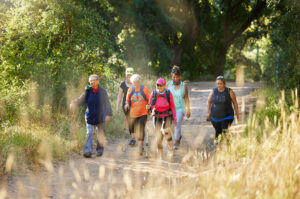
- Regular exercise, movement, physical activity can improve mood, confidence, mobility, balance and strengthen your legs
- Check with your healthcare provider about the best exercise program for you
- Examples of exercises that increase strength and balance include
- Tai Chi, walking, lap swimming, yoga
Have Eyes Checked Regularly
- Our visual acuity decreases naturally as we age
- Have your eyes checked by an eye doctor at least once a year
- Update your eyeglasses as needed.
- If you have bifocal or progressive lenses, you may want to get a pair of glasses with only your distance prescription for outdoor activities, such as walking. Sometimes these types of lenses can make things seem closer or farther away than they really are.
Have Your Feet Checked
- Being able to see and walk comfortably can prevent falls.
- Have your healthcare provider check your feet once a year (more frequently if you are diabetic)
- Discuss proper footwear and ask whether seeing a foot specialist is advised.
How Can a Care Manager Help?
- A Care Manager can evaluate your risk factors such as health history, recent illnesses/falls/diagnosis
- We can provide a home assessment, plan necessary home modifications, and assist with environmental adjustments.
- Look at equipment needs for safety in the home such as grab bars, stair glide, handrails, and for use such as walker, fall detection device, and a medication box. Help with selecting and properly using assistive devices.
- Guidance on resources to assist you at home from transportation, to chores, and meals
- Help arrange assistance with personal hygiene needs
- Selecting home health support
- Work with you and your healthcare provider to implement their advice such as physical therapy, medication management, in-home assistance
- Assist with garnering in-home care
You Can Prevent a Fall
Taking these steps and engaging the support of your healthcare provider, family, and friends can go a long way in preventing a fall. Be proactive. Be vigilant. Always assess possible risks and address issues before they result in injury or serious harm.
Could you or someone in your care benefit from a home assessment to help reduce the risk of falls at home? We can help! Schedule a free, get-acquainted call today to talk with one of our certified Care Managers.
*Illustration credit: National Council on Aging