
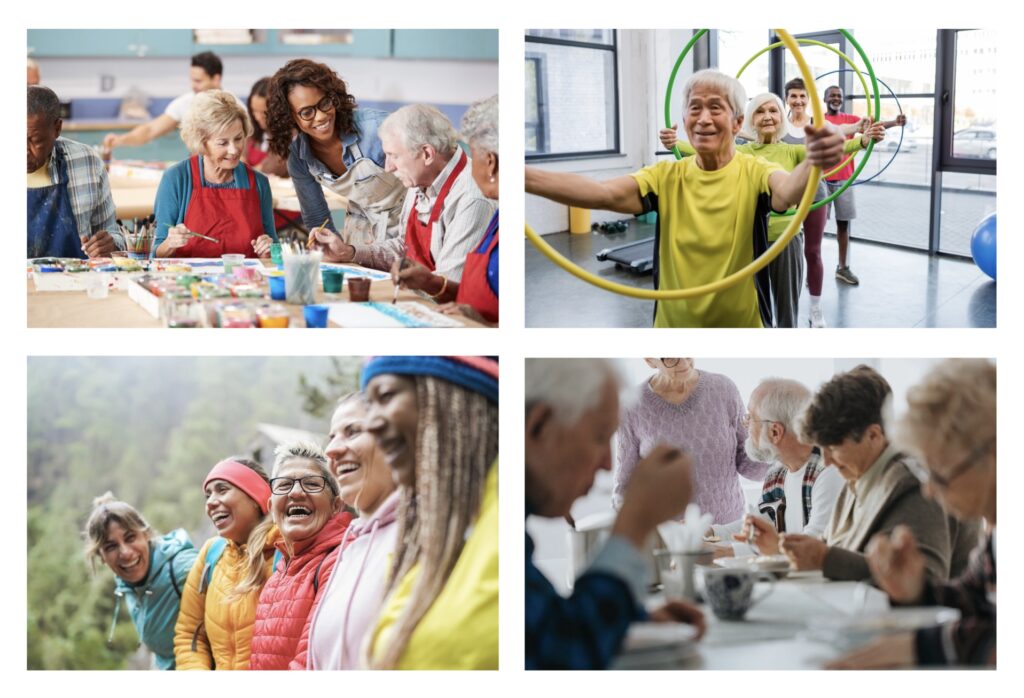
Tai Chi. Spanish conversation. Tie-dye workshop. Forest therapy guided walks. Community dining. Line dancing. Haircuts. Social media class. Needle arts. Memory loss program. Zumba. Scrabble. Song Circle. Jewelry making. Caregivers support group. Computer lab. Watercolor painting. Pinochle. Foot care. Yoga. Men’s Group. Medicare counseling. Mah Jongg. Dental hygiene clinic. Improv. Ukelele song group. Book club. Acupuncture…and more!
Where are all these programs, activities, events, and services happening? At your local senior center!
September is National Senior Center Month, an invitation to challenge outdated perceptions of aging and senior centers and explore this year’s theme of Powering Possibilities: Flip the Script.
If you are fortunate enough to participate in programs and activities at your local senior center, you know from experience that each center offers opportunities to learn, engage, grow, connect, and get active.
Haven’t visited recently? I encourage you to do so. You will be pleasantly surprised, I promise!
Just ask Diane. She’s been enthusiastically active at the Greenwood Senior Center (GSC) in north Seattle since 2008, “The GSC and all its programs help fill a growing need and creates a community that brings inspiration, education, connection, recreation, and sometimes ‘perspiration’ to so many of us seniors. For me, the GSC means fun and games, intellectual stimulation, and community, but that isn’t all there is to it by a longshot. When my dad developed dementia, a social worker at the senior center helped me navigate things and provided helpful resource materials.”
Diane’s experience is similar to those who participate at other centers. “The programs and activities are what get me out of bed in the morning!” shares Ben, who is 83 and a regular at the Edmonds Waterfront Center. “Everyone is welcoming and supportive. We are so grateful to have the center in our lives,” cheer Mary and Bob, a couple who enjoy the weekday lunches and classes at the Stilly Valley Center in Arlington.
To get the inside scoop on how senior centers are better serving their communities, I reached out to MJ Jurgensen (they, them, theirs), Director of Senior Programs at the Greenwood Senior Center in Seattle, and Amy Lee Derenthal (she, her), Executive Director of The Center for Active Living (formerly the Senior Center of West Seattle).
How does your Center foster creativity, connection, purpose, and resilience in later life?
MJ: “The Greenwood Senior Center offers countless opportunities for older adults and community members to socialize, engage in hobbies, learn, find essential services, share meals, and more. It is our goal to provide a space where folks feel welcome, safe, and are able to thrive. A second home. A third place.”
Amy Lee: “The Center for Active Living supports the physical, mental, and emotional health of older adults through a wide variety of engaging activities, programs, and events. We also serve as a gateway to essential services—such as meals, counseling, and referrals to critical social resources. Our goal is to be a welcoming, energizing place where people can connect, create, and thrive at any stage of life.”
What do you wish more people understood about senior centers and the role they play in aging well?
MJ: “Senior Centers are much more than bingo and Scrabble. Senior centers are places where people turn when they aren’t sure where else to look for support. And what they find is a second home, family, lifelong friends, and staff that care and show up.”
Amy Lee: “Senior centers are vibrant community gathering places where people can connect, learn, and have fun while maintaining physical, mental, and emotional well-being. We also provide essential services—meals, counseling, and referrals—that support healthy, independent aging. And just to clear up a common misconception—no one lives here! 😊 We’re a place for people who live in their own homes and want to spend their days in good company.”
How do you see the role of senior centers evolving in the coming years?
MJ: “Senior centers are increasingly necessary, especially in urban areas. As cost of living rises, folks need places that offer free or nearly free classes, support groups, and essential services. My hope is that through lobbying and advocacy, we are able to continue to build upon the infrastructure that is in place so that Seattle remains an ‘Age Friendly’ city.”
Amy Lee: “The future is about belonging and relevance. People need to see themselves here, whether they’re newly retired, navigating life changes, or seeking connection. Once they feel ownership—’this is my place’—they will grow and age with us. Programming will be key to this evolution. Our recent member survey revealed top priorities: more exercise/movement, expanded arts & crafts, wellness & life planning, social activities, and practical skills & support.”
Are there any upcoming initiatives or expansions you’re especially excited about?
MJ: “In the long term, we hope to rebuild the Greenwood Senior Center to include affordable senior housing, adequate parking, and greater accessibility. We hope to utilize all of our spaces throughout the day to accommodate more of our community. I am excited about the growth of our daily lunch program and the emphasis on sustainability and ethical sourcing. I am proud to say we have a Memory Loss Program that almost always has a wait list for activities and groups.”
Amy Lee: “We aim to serve a diverse and growing West Seattle community—including White Center, Delridge, Pigeon Point, and Highland Park—through pop-up programs in community centers, libraries, and other neighborhood hubs. This approach increases equity, accessibility, and cultural relevance. We’re also exploring extended hours at our current location to accommodate people who work during the day or prefer later exercise and social programs.”
Powering Possibilities
The beauty of the modern-day senior center is how they adapt and change in anticipation of and response to expectations, diverse needs, and opportunities. Local senior centers have something for everyone, a solid mix of fun, fitness, and friends.
To better serve their communities and participants, MJ, Amy Lee, and other Seattle-area senior center directors have come together to form a Senior Services Coalition. The coalition meets regularly, providing mutual support, idea and resource sharing, problem solving, and advocacy. They learn from one another. They celebrate together. This coalition helps make senior centers stronger.
According to the National Center on Aging, senior centers power possibilities through:
- Social connection that combats loneliness and isolation
- Health and wellness programs that promote vitality
- Economic security resources that offer stability
- Creative and cultural engagement that brings joy and purpose
- Access to services that support independence and well-being
And as both MJ and Amy Lee shared earlier, we understand the critical importance of belonging and connection. Former Surgeon General, Dr. Vivek H. Murthy identified loneliness as a national epidemic—and senior centers have long been the remedy. They are places where people gather, engage and support one another, and build community.
Today’s senior centers are vibrant, inclusive, health-focused, and tech-enabled environments that aim to support independence, dignity, and quality of life for older adults. They continue to adapt as new generations of older adults bring different values, skills, and expectations into later life.
Don’t wait to discover the friendships, programs, and health benefits that your community offers—visit a senior center today.
- Greenwood Senior Center opened in 1977 and became part of the Phinney Neighborhood Association (PNA) in 2006.
- The Center for Active Living (formerly the Senior Center of West Seattle) opened in 1971 and changed their name in 2024 to better reflect their mission and vision.