

Topic: caregiving

This is the third article in a three-part series on Navigating Age with Confidence
Proactive planning is essential for navigating life’s unexpected events and transitions with clarity and confidence. Whether it’s a medical emergency, a sudden change in circumstances, or simply the natural progression of aging, having a well-thought-out plan in place allows others to step in and support you effectively when needed.
Taking the time to prepare, by organizing key information, optimizing your possessions, and considering essential questions, ensures that your wishes are respected and that critical decisions can be made without unnecessary delay or confusion. …
5 Essential Questions: Building Your Plan with ConfidenceRead More »

What is your role at Aging Wisdom?
I work in an administrative role, part time, supporting the Leadership, Care Management, and Creative Engagement teams so they can focus on providing exceptional care and guidance to our clients and their families.
…

My Grandpa meant the world to me. Early in my life, it was just me and my mom. She was a teacher, and we’d spend the summers with my grandparents in Portland. My mom would take classes while their assignment was to keep me out of trouble.
Lucky for me, this meant hours with my Grandpa. He lovingly referred to me as “the Streaker,” since most of my time was spent in their backyard, running around like a maniac, jumping in and out of my cheap plastic pool, not wasting time with a swimsuit, soaking in the freedom. …
Gen X: We’re up! Turning to the next generation of caregiversRead More »

The ways we connect with each other contain both small moments and lasting lessons. Together we can celebrate how we build connections through different methods of communication between people living with and without Alzheimer’s dementia. Without the many unique individuals living with dementia, including the three individuals in the stories below, our appreciation for connection is less full.
This is written with gratitude to them. …

Multigenerational housing is a growing trend in the United States and perhaps something you’re considering. On the plus side, there’s increased time for bonding and for caring for elders or children as needed, as well as improved finances from sharing expenses. And there is peace of mind knowing you are surrounded by family. …
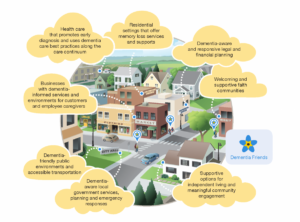
“It feels so isolating.” This is a common refrain I hear when talking to family care partners of persons living with dementia.
In surveys, support groups, and personal conversations, spouses, partners, and adult children caring for someone living with dementia express the need for a variety of services, especially for social and emotional supports. …
Changing the way people think, act, and talk about dementiaRead More »

Respite, as defined by Merriam-Webster, is “an interval of rest or relief.”
We all need rest, a break from the daily demands of life. This is especially true for family care partners. Respite is a necessity that is often overlooked, yet it is an essential part of every caregiver’s own care. …

“An ounce of prevention is worth a pound of cure.” ~ Benjamin Franklin
Family caregivers, we see you. There are medical appointments to schedule, insurance invoices to reconcile, medication to administer, groceries to buy, meals to prepare, laundry to wash. You also have a home to maintain, and the car needs an oil change and tires rotated. There are finances to manage and bills to pay. All this in addition to caring for your partner or parent. And if you’re lucky, you can get some respite and a little self-care time.
Amid daily responsibilities and within your role as a care partner, do you also find yourself worrying about who would manage all this on behalf of the person in your care if something were to happen to you? …
Contingency Planning: What if Something Happens to You?Read More »

Last week we talked about the mix of emotions around helping our parents, as well as setting healthy boundaries.
Caregiving is hard work. Managing it all can be challenging, on top of everything else: work, other family relationships, personal commitments, and finding time for yourself.
In the midst of it all, we need to remind ourselves to take time to engage in a mood shifter that can become a mood lifter. These are the little things we can do throughout the course of a tough day to help put it all in perspective. Not burn out. Lift our mood. …

Our work as Care Managers may be focused on the well-being and quality of life of one person, our client, but it requires understanding and looking at the whole picture.
What is the whole picture? It includes everything in the client’s life: health (and disability), family systems and dynamics, goals, preferences, personal history, finances, values, legal, housing, services & supports, and what brings joy and meaning.
Knowing the whole person, the whole picture, helps us to better guide families as they navigate options for aging well, caring well, and living well.
Additional Reading
- What is Aging Life Care?
- Get in the Lifeboat: Don’t Float Alone! Key Supports You’ll Want in Your Boat
- Alzheimer’s and the Family Caregiver
- Medical Emergencies: Are you prepared?
Could you benefit from the guidance of a Care Manager who looks at the whole picture? Click here to schedule a get-acquainted call and to determine together whether our services are a good fit for your needs.
This is an excerpt of a longer conversation between Lisa Mayfield, Aging Wisdom’s founder and principal, and Laura Vaillancourt on her Life on Repeat podcast.