

The ways we connect with each other contain both small moments and lasting lessons. Together we can celebrate how we build connections through different methods of communication between people living with and without Alzheimer’s dementia. Without the many unique individuals living with dementia, including the three individuals in the stories below, our appreciation for connection is less full.
This is written with gratitude to them.
—
 After enjoying the view of Elliott Bay by the Discovery Park Lighthouse, we stop to look at a sign about harbor seals. We take turns narrating the seals’ voices and inner thoughts when a lost-and-found item falls from on top of the sign. She picks it up and places it back on the stand, “now you stay there,” she says sternly. Our visits are full of imaginative play like this. We become silent mimes with props spontaneously taken from what’s in our hand- a stirring spoon as we’re baking, or the morning newspaper still rolled into a scroll as it’s brought in from outside. We break into laughter, unencumbered by needing to find the right words and finding connection in shared creativity, silliness, and allowing ourselves to exist in the present.
—
 Sitting together at a table, we work to dye hard-boiled eggs as a gift to her husband who lives down the street. She oversees the color selection, and I hold up a freshly colored blue egg for her approval, “How does this look?” Without pause, she replies, “It looks blue,” and bursts into laughter. Her insights extend from color-dyed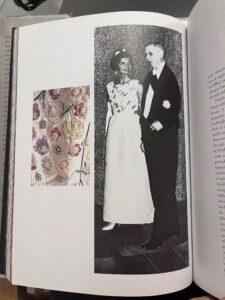
 designs to fashion advice. Newly getting to know one another, we had sifted through different sensations like the feelings of textures, smells, and music, then onto objects until a spark struck. It was a patient process of finding something that didn’t bore one of us (quite literally at times!) to sleep. Eventually came an oversized book of designer dresses – our unexpected key to connection. Fashion became an opportunity for her to share her good taste, quick-witted remarks, and unhurried company.
—
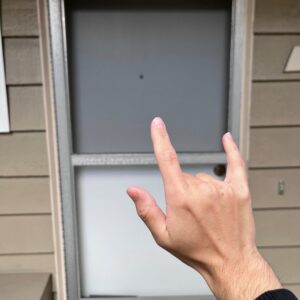 The door to her apartment closes behind me, and the chatter from the skilled nursing community’s hallway meets silence. She smiles as I make my way to her bed, “Well, hello,” she says, and I smile and wave in reply. Our visits typically start this way. Due to her hearing loss, my side of our exchange embraces smiles, gestures, and writing on the small notepad she chooses to keep nearby rather than my use of speech. She asks if she can show me a treasured possession, a music box stored in her safe that she trusts me to unlock. Cradled in my hands, its unique tune plays and she watches my response. The music takes physical form in my reaction, and although she can no longer hear it, it comes to life across our bond. The moment transcends needing to use one shared method of communication. At the end of our visit, she holds up the phrase she asked to learn in American Sign Language, and I return her gesture, “I-L-Y.”
—
There is transformative power in choosing to embrace methods of communication that may be differently or newly utilized by an individual living with dementia. Rather than encouraging someone to assimilate to our communication expectations, we can embrace how individuals express connection in the moment.
Music and non-verbal comedy are two ways to connect without putting pressure on “finding the right words.” Tapping into the senses and sharing experiences become opportunities to “do” together. However connection takes place, each bond is as unique as the individuals within it, but our stories are shared celebrations for what we can learn from one another.