

Topic: dementia

Adult Family Homes (AFH) are residential homes licensed to care for up to six non-related residents. They provide room, board, laundry, necessary supervision, and necessary help with activities of daily living, personal care, and social services.
The adult family home model has created a space for people to get a high-level of care, but in a comfortable home-like setting. AFH are especially wonderful for residents who would benefit from more one-on-one support and a calmer environment. …
Adult Family Homes: Smaller, calmer residential environmentsRead More »

Memory care is specifically designed to provide a safe, supportive, and structured living environment, be it a stand-alone community or a separate unit within assisted living or a CCRC. …

As we grow older, it’s not unusual to have trouble finding the right word or recalling a name on occasion. If trouble with word-finding or recall persists, or performing everyday task like meal preparation or managing bills becomes uncharacteristically difficult, it might be a sign of something more serious.
It’s important to stress that not every older adult with memory problems has dementia, and Alzheimer’s and other forms of dementia are not a normal part of aging. …
Memory and Forgetfulness: What’s Normal, What’s NotRead More »

The decision to move someone in your care to memory care or an adult family home can be difficult. However, it’s often the best choice when daily caregiving responsibilities begin to impact the safety and health of either the person living with dementia and/or their primary caregiver, be it a spouse, partner, or adult child. …

Memorial Day weekend is often the unofficial kickoff to summer celebrations, graduations, weddings, and reunions. As you make plans for these special gatherings, it a perfect opportunity to adapt favorite traditions and create new ones. To minimize anxiety and encourage inclusive, more enjoyable gatherings for all, a little advance planning can go a long way to ensure everyone has a wonderful time.
For the person in your care who is living with Alzheimer’s or another dementia, here are a few tips to help make celebrations more inclusive: …
“Transformation happens when someone feels safe and seen and heard. And when people are recognized as who they are rather than what they’re living with or a diagnosis they’ve been given,” reflects Tami Sandygren, Care Manager.
Tami’s insights in this week’s Wisdom Wednesday podcast provide a thoughtful exploration of personhood, purpose, and ways to honor choice.
In his book Dementia Reconsidered: The Person Comes First (1997), Tom Kitwood first defined personhood in dementia as “a standing or status that is bestowed upon one human being by others in the context of particular social relationships and institutional arrangements. It implies recognition, respect, and trust.”
Personhood in dementia is concerned with treating people living with dementia with dignity and respect, in a manner that supports their sense of self. It focuses on treating the person living with dementia as a person first and foremost. Supporting personhood in dementia is the key goal of person-centered care.
Adapting to a family member’s memory changes gives you and your family a lot to think about. Our Certified Care Managers are experts at helping families make sense of and navigate the changes that come with Alzheimer’s and other dementias. CLICK HERE to schedule a call today to plan your best path forward.
Additional Resources

As we grow older, we all experience cognitive change. Our brain, like the rest of our body, naturally changes as we age. Changes in cognition can be subtle and most changes are normal. Misplacing keys or taking longer than usual to recall a person’s name or a word are common examples. There are times, however, when we notice changes that are consistent, repetitive, and may suggest cognitive impairment. …
Don’t Go Down the River of Denial; Recognize the SignsRead More »
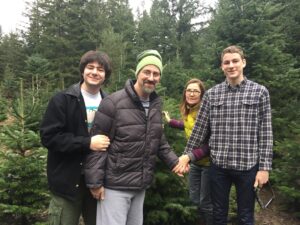
Image courtesy of Allyson Valentine Schrier
Last month, our colleague Wendy looked at the difference between Alzheimer’s and dementia. One of the types of dementia Wendy listed was Frontotemporal Dementia, or FTD.
Frontotemporal Dementia (FTD) is not well-known, but it’s been in the news recently. In February, the family of much-beloved actor Bruce Willis announced that he was diagnosed with FTD.
A year earlier he had been diagnosed with aphasia, a condition that affects the ability to speak and to understand language. The symptoms have since progressed and are no longer limited to difficulty with communication, leading to his more recent diagnosis of FTD.
What is Frontotemporal Dementia or Disorders (FTD)? …
Actor Bruce Willis has Frontotemporal Dementia (FTD). What is FTD?Read More »

It’s not unusual to hear the terms dementia and Alzheimer’s used interchangeably, though they are not synonymous; they have different meanings. Dementia is an umbrella term that describes a broad range of symptoms; dementia is a syndrome, not a disease. Dementia is a decline in cognitive function that is typically not reversible. …
What’s the difference between dementia and Alzheimer’s disease?Read More »

A lack of insight or awareness is when a person living with a form dementia or a brain injury is unable to recognize changes in their behavior and emotions.
Adult children may interpret this as a parent being difficult or in denial. However, the part of the brain that is damaged, often by Alzheimer’s, Lewy Body dementia, or a stroke, is what is affecting the individual’s inability to see these changes. It is related to loss of activity in areas in the front of a person’s brain, known as the frontal lobes. …