

Topic: communication

Whether it be health crises or weather-related issues and natural disasters, Aging Life Care Professionals™ (aka Care Managers) are the rock for overwhelmed families by providing calm, creative thinking, flexibility, and excellent communication. …

The ways we connect with each other contain both small moments and lasting lessons. Together we can celebrate how we build connections through different methods of communication between people living with and without Alzheimer’s dementia. Without the many unique individuals living with dementia, including the three individuals in the stories below, our appreciation for connection is less full.
This is written with gratitude to them. …

Deciding how to divide assets among one’s children is often challenging. The challenges only multiply in a step- or blended family situation. Today, about one-quarter of all marriages include stepchildren. Among remarried couples, almost two-thirds involve children from a previous relationship.
Blended families can look like any other family, but the dynamics are very different, emotionally and legally. …

Do you feel defensive when your kids visit? Notice them exchanging knowing glances when you don’t recall a date or name?
Perhaps you feel reluctant to approach them when you do have concerns, because they overreact. So you keep your distance. That isn’t good, either.
It’s a fine line between feeling that your adult children love you and want to protect you, and feeling smothered or even invalidated by them in terms of your competence and self-sufficiency.
Noted geriatrician and author Atul Gawande, MD, observes that while adult children worry most about safety, older adults worry about autonomy and independence. Put another way: Adult children think in terms of “caring for.” Older adults prefer to be “cared about.”
…

As Lisa shares, part of the process of helping your parent is assessing the landscape and determining if their living situation is really a crisis and requires you to act. Or is there something you can do to make their home safer; an opportunity to insert a little bit of help by starting small? …

Sometimes families don’t have a good system of communication. Having an objective third party, such as an Aging Life Care professional (AKA Care Manager), guide the conversation can help improve communication.
At other times, families can feel overwhelmed and as if their issues are insurmountable. An experienced Care Manager as a navigator can help bring down the anxiety level and help families see that they’re not alone. …
Helping feuding families achieve harmony around what’s best for mom and dadRead More »
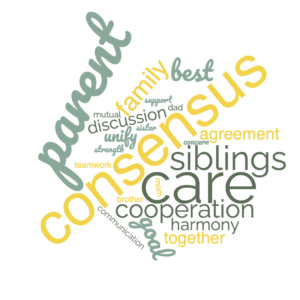
Family meetings are a positive way to initiate conversations with siblings about someone in your mutual care. For some, this may serve as a starting point.
Family meetings are also a great way to facilitate communication between family members and build consensus about next steps in a situation that may be escalating.
Through a family meeting, everyone is getting the same information at the same time. There are opportunities for questions and clarification. And it’s also a conversation where family members can comfortably and safely share. …

When there’s family conflict, Care Managers serve as a neutral third party that provides an unbiased assessment of the situation and guidance to families on the best options moving forward. …

“Dementia is a shift in the way a person experiences the world around them.” ~ G. Allen Power, MD
We all seek community, purpose, meaning, connection. Our need for relationship and social connection is at the heart of being human. That doesn’t change if we are living with Alzheimer’s or another dementia. …