
We still don’t know what causes many dementias such as Alzheimer’s disease, the most common form of dementia, but studies continue to provide evidence of modifiable risk factors across the lifespan that could potentially prevent or delay the progress of nearly half of dementia cases.
Non-modifiable risk factors are age, genetics, and family history. Modifiable risk factors include lifestyle, certain health conditions, environmental exposure, and social elements.
In 2024, the Lancet Commission released an encouraging report addressing 14 specific modifiable risk factors, providing evidence-based findings about prevention, intervention, and care. Nearly half of all dementia cases worldwide could be prevented or delayed by addressing these 14 modifiable risk factors.
Starting with this article*, we will share details about these lifestyle interventions, their benefits, and ways to incorporate them into your life through a series of articles over the coming months.
What I appreciate most about these modifiable risk factors is that they contribute to brain and heart health, as well as social health, the dimension of well-being that stems from connection, community, and relationships.
Physical Inactivity is the first modifiable risk factor we will explore.
Regular physical activity is one of the BEST ways to reduce risk. Exercise is good for your heart, circulation and vascular health, weight maintenance, and mental wellbeing. What’s good for your heart is good for your brain!
The Report recommendation is that “adults engage in 150 minutes of moderate aerobic activity or 75 minutes of vigorous aerobic activity each week.”
As Erik B. Larson, MD, VP emeritus for research and health care innovation for the Washington region of Kaiser Permanente, notes in his book Enlightened Aging: Building Resilience for a Long, Active Life, regular physical exercise is the most potent activity to build and maintain brainpower. He also lays out in Chapter 6 the ways that exercise can become part of your daily routine and the benefits of keeping engaged physically.
Dr. Larson stresses the keys to physical activity success are:
- Making exercise a habit, just like brushing your teeth.
- Picking something you enjoy such as dancing, an exercise class at your community center, walking in nature, tai chi, yoga, pickleball, bicycling, hiking, lap swimming, or water aerobics.
- Finding time to exercise, even when it’s difficult: combine it with other activities such as reading the paper while on a stationary bike; listening to an audiobook while walking on a treadmill; lifting weights or doing squats while watching TV.
- Avoiding being sedentary; even 10 to 15 minutes of movement is beneficial. Gardening, yardwork, and house cleaning count too!
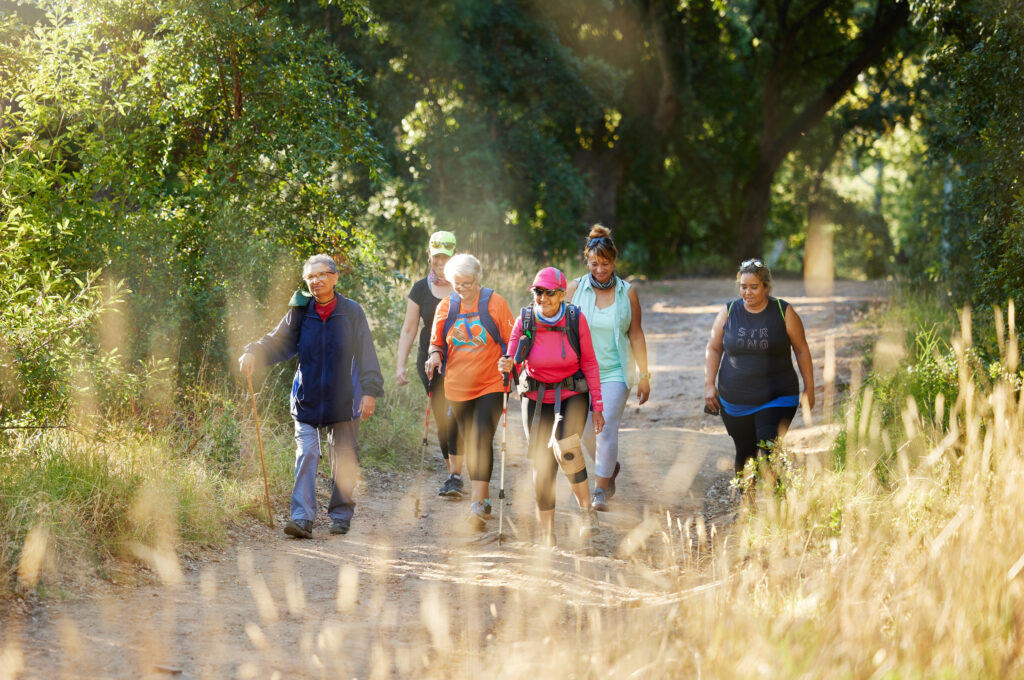
- Brisk walking is the easiest. And weather doesn’t need to be a deterrent — find a mall with a walking program. Many senior and community centers have walking and hiking clubs.
- Bringing along a friend! This helps you stay encouraged and accountable. It also adds the benefit of social engagement (another modifiable risk I’ll address in a future article).
Added Benefits of Regular Physical Activity
In addition to reduced rates of dementia, research measuring the effect of exercise in middle-aged or older adults have reported improvements in thinking and memory1.
- Exercise is also a stress and anxiety reducer, improves mood, and helps you relax.
- Group activities like walking and hiking clubs are a wonderful way to connect and engage with others. This helps to keep the brain active and socially connected.
- Activities like tai chi, Pilates, Jazzercise, Zumba, and yoga are also good for balance and staying flexible and may prevent you from falls.
- Many studies show a clear link between increased physical activity levels and improved thinking skills.
Need further encouragement to start or continue engaging in physical activity? This article from the National Council on Aging – 5 Tips to Help Older Adults Stay Motivated to Exercise – has been a boost for me and you might enjoy it too. I have benefitted from setting attainable goals and tracking my progress, and I know you will as well.
Get Active and Keep Moving!
*In the next article in this series of 14 modifiable dementia risk factors, we will look at hearing impairment and untreated vision loss.
NOTES
- Adria Quigley et al., “Effects of Exercise on Cognitive Performance in Older Adults: A Narrative Review of the Evidence, Possible Biological Mechanisms, and Recommendations for Exercise Prescription,” Journal of Aging Research, May 14, 2020