

Topic: falls prevention

It’s Falls Prevention Week, an opportunity to refresh our knowledge of falls risk and how best to prevent them.
Why is this important? According to the Centers for Disease Control and Prevention, falls are the most common reason for visits to the emergency department (ED), as well as the leading cause of fatal and nonfatal injuries for older Americans. More than 95% of hip fractures are caused by falls.
This should give us all pause. …
Falls Prevention: Prioritize exercise, vision, and honest conversationsRead More »

Clutter, candles, and cooking, oh my! Use this checklist for holiday safety and peace of mind.
As you plan for holiday gatherings and activities, don’t overlook potential safety hazards in your home. Often, it’s the simple details which are overlooked that can send the holidays from celebration to chaos in short order. …

In this podcast episode, we provide a snapshot of the many ways a Care Manager (aka Aging Life Care Professional) can offer guidance, coordination, crisis intervention, and most importantly, peace of mind. A Care Manager is an essential tool in a client’s resources toolbox.
Care Managers help in a multiple of ways. Here are a few examples of how we’ve assisted in a variety of situations, from preventing falls to managing care costs to recommendations for supports to remain at home.
Consultations. Sometimes families and friends meet with us separately, not involving the individual for whom there is concern, initially, be it a parent, spouse, or close friend. They may be worried about the person in their care remaining at home safely, or how best to manage a new health diagnosis, or managing resistance to help.
Other times, it’s a valid concern about money and the cost of care. Or Aunt Sally hasn’t set up her powers of attorney, or she doesn’t have a will or advance directives, and she has a cognitive impairment. They’re seeking advice on what they should do to make sure the person in their care is protected.
When we have a consultation, we’re looking at the immediate as well as the big picture. We help with next steps, recommendations, and resources. Oftentimes families will ask us for our assistance to implement next steps.
Home assessments. During an assessment, we observe and assess the client within their own home. We’re looking head-to-toe, not in a medical evaluation approach, but in a daily living and life management approach. We also assess the home for safety and what could make it easier for the client to remain in their home.
As Care Managers, we can serve as the point person to help with navigation, guidance, and implementation. We listen. We educate. We advocate. We coach. We reduce stress. We help clients save time and money.
Want to explore the benefits of working with a Care Manager? Click here to schedule a get-acquainted call with a Certified Care Manager.
RESOURCES
- What is Aging Life Care?– fact sheet
- Falls Prevention: From Awareness to Action– blog
- The Dance: Finding Balance When Helping an Aging Parent– article
- Aging Wisdom’s Services brochure– downloadable
Falls among older adults continue to be a national public health concern. Fall-related injuries are the most common reason for visits to the Emergency Department by adults 65 and older. Falls remain the leading cause of injury or death for older Americans.
It is Falls Prevention Awareness Week, a nationwide observance sponsored annually by the National Council on Aging in partnership with the Administration on Community Living. Their objectives are to raise awareness on preventing falls, reducing the risk of falls, and helping older adults live without fear of falling.
This year’s theme is From Awareness to Action. …

Falls are multifactorial: involving, or dependent on several factors or causes. There are a number of possible contributors to falls that we often overlook that are essential to overall health, mobility, balance, and independence.
From our experience as Care Managers, we know how important it is to schedule regular check-ups, especially as we age. There can be a ripple effect if we aren’t careful. Vision, hearing, and foot care all play key roles in health maintenance and fall risk prevention. Our eyes, ears, and feet also support our ability to get regular exercise. And regular exercise can contribute to so many positives: strength, balance, overall well-being, appetite, mental acuity and cognition, a good night’s sleep. …
Falls Prevention (3/4): More Pearls of Wisdom for Health and IndependenceRead More »

How Your Healthcare Providers Can Help with Falls Prevention
Health care providers have our best interests at heart. They help us maintain good health and overcome or manage a health condition. Being open and honest with them is important. If they don’t know about something, they can’t help you. …
Falls Prevention (2/4): Healthcare providers as partners in preventionRead More »

Throughout September, we are revisiting this informative series of Falls Prevention conversations.
This year’s theme for Falls Prevention is “From Awareness to Action,” which is great way to frame our conversation throughout the month.
Most falls are preventable, yet they happen frequently. In our work as Aging Life Care Professionals (AKA Care Managers) an important part of our job is to look for, anticipate, and minimize issues and risks that might compromise a client’s safety, well-being, and quality of life.
Falls are not a normal part of aging. But they are a common reason that clients and their families consult with us. When there is a crisis, such as a fall resulting in an injury or hospitalization, a client may come to us for guidance on next steps.
What does that look like? Do they go home? Do they have the right setup? Is home the right place for them initially? What are their options?
Our goal is to provide resources and tailored solutions, to get our client home safely and make sure that it’s a sustainable situation for them. We hope this series will inform you about short- and long-term improvements and changes you can make to avoid some of the most common reasons for falls.
Knowledge IS power, and an ounce of risk prevention is worth a pound of cure!
Do you want to mitigate you fall risk? You may benefit from a Falls Risk Assessment. Schedule a get-acquainted call today with one of Aging Wisdom’s Certified Care Managers today to explore the benefits.

Unexpected health changes that require long-term care can occur at any age, though the likelihood increases with age. Someone turning age 65 today has a 70% chance of needing long-term care services and supports as they grow older, according to the U.S. Administration on Aging.
I’m sure you know someone who has assisted an aging parent navigate a health challenge. It was likely a stressful situation because their parents had not made plans for long-term care, refused help, and left their adult children to pick up the pieces during a crisis.
This scenario is all too common and why long-term care planning is essential, so your family is not burdened by your potential health, memory, or mobility changes.
Now is the perfect time to make sure you are well set for the future. Planning doesn’t have to be onerous; it will bring peace of mind and allow you to focus on what matters most.
…
It’s Falls Prevention Awareness Week, a national health campaign with the goal of increasing awareness around falls and injury prevention. As we transition from summer to fall, it’s a perfect reminder to engage in a personal falls prevention review.
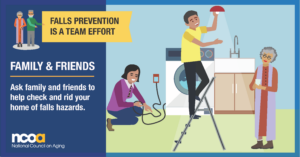
Falls preventions is a team effort. Engage your family and friends, healthcare provider, pharmacist, and eye doctor to help. Care managers like me are always ready to offer guidance as well. …

It’s Falls Prevention Awareness Week. With Fall officially starting this Wednesday, it’s a great reminder to review the common causes of falls as well as what we can do to lower our risk, prevent injury, and stay out of the emergency department.
A recent national poll on healthy aging conducted by the University of Michigan suggests that the COVID-19 pandemic may have contributed to a decline in physical activity and functioning among older adults. Declines in physical condition and mobility can increase the risk for falls. …