
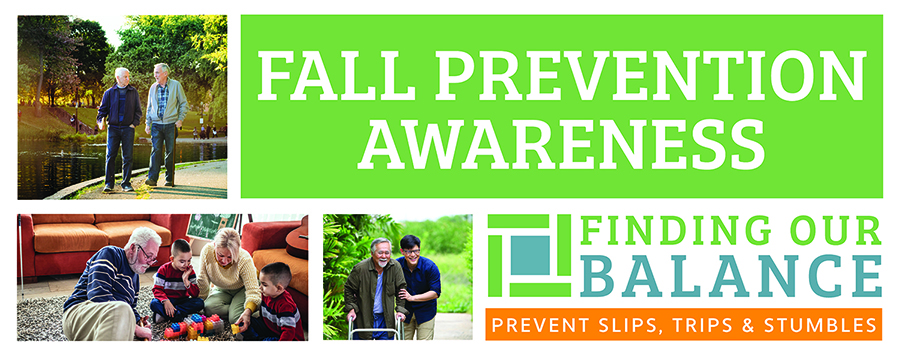
Falls among older adults continue to be a national public health concern. Fall-related injuries are the most common reason for visits to the Emergency Department by adults 65 and older. Falls remain the leading cause of injury or death for older Americans.
It is Falls Prevention Awareness Week, a nationwide observance sponsored annually by the National Council on Aging in partnership with the Administration on Community Living. Their objectives are to raise awareness on preventing falls, reducing the risk of falls, and helping older adults live without fear of falling.
This year’s theme is From Awareness to Action.
Most falls are preventable, and our goal is to educate and empower everyone to act and reduce your risk of falling.
Here are 6 proven steps for a falls prevention strategy. These strategies are smart, no matter your age:
One: Keep your home safe
- Remove tripping hazards like throw rugs, shoes, pet toys, cords
- Improve lighting inside and outside of your home with bright, non-glare bulbs
- Add a nightlight in the bedroom, bathroom, and hallway to help you navigate in the dark and to find the light switch.
- Install grab bars in key areas
- Make stairs non-slip – inside and out – and safe by installing hand railings
- Move furniture and “stuff” to create clear paths for walking
- Place frequently used items within easy reach
- Keep mobile phone, fall pendant and chargers at bedside and ready to use
Two: Find a good balance and exercise program
- Build balance, strength, and flexibility.
- Do exercise regularly. If you see a physical therapist, follow their exercise plan for strength, endurance and balance.
- Check your local senior center, YMCA, municipal recreation, or Area Agency on Aging for classes and ideas. Check online options too!
- Walking is a great way to stay in shape
- Take a friend, as you’re more likely to attend a class or go on a walk
Three: Have an honest conversation with your health care provider:
- Share your history with your doctor and let them know if you have had a fall in the last year
- Ask your doctor to do a fall risk assessment
- Review your medications with your doctor or pharmacist annually. Report side effects such as sleepiness, confusion, dizziness, wooziness, and/or imbalance when walking
- Ask your doctor or pharmacist to make sure your medications don’t have side effects that may increase falls
- Take medications only as prescribed
- Use only one pharmacy for prescriptions, as your pharmacist can track all the medications you are taking and knows which don’t work well together
Four: Get your vision and hearing checked annually and update your eyeglasses
- Your eyes and ears are key to keeping you on your feet.
- Use prescribed glasses, wear them properly, and avoid wearing sunglasses inside
- Be safe while wearing bifocals: Bifocals can blur your vision as you navigate steps, curbs, or edges, especially outside. If you wear bifocals, tuck your chin in when stepping over curbs and on stairs to look through the distance portion of your glasses, which provides a clearer view or wear single vision glasses while outside and on stairs while inside.
- Check for hearing annually and follow through on recommendations
Five: Foot health, foot care, and proper footwear are essential
- Wear shoes that fit well and have good support. Avoid shoes that are high heeled, don’t have laces, straps or buckles, and shoes that have smooth soles.
- Getting regular foot care can help prevent a fall, address pain, help with walking. Have your healthcare provider check your feet once a year (more frequently if you are diabetic)
- Treat conditions that affect foot health, and a person’s ability to walk comfortably such as gout, diabetes, arthritis, and neurological disorders.
Six: Engage support
- Build your team:
- Talk to your family members and friends
- Enlist their support in making your home safer and to be an exercise buddy
- Consult an Aging Life Care professional for a home safety assessment. We love to help older adults stay healthy and independent by checking their risk for a fall, making recommendations, and connecting you to resources and supports.
- Trust your family, friends, and doctor to have a one-on-one conversation about your concerns and fall risks.
- Be specific. The more information you share, the more your doctor, family and friends can help you. Share upcoming medical appointments, and your medication list.
- Keep the conversation going. One conversation is often not enough. Let family and friends know if your needs change.
- Be honest.
Do you want to mitigate your fall risk? You may benefit from a Falls Risk and Home Assessment. Schedule a get-acquainted call today with one of Aging Wisdom’s Certified Care Managers today to explore the benefits.
Resources:
- NCOA Falls Free CheckUp: https://www.ncoa.org/age-well-planner/assessment/falls-free-checkup
- Eldercare Locator: https://eldercare.acl.gov/Public/Index.aspx A public service of the U.S. Administration on Aging connecting you to services for older adults and their families. You can also reach us at1-800-677-1116.
- AARP HomeFit Guide: https://www.aarp.org/livable-communities/housing/info-2020/homefit-guide.html
- Aging Life Care Association: https://www.aginglifecare.org