

Topic: dementia

We still don’t know what causes many dementias such as Alzheimer’s disease, the most common form of dementia, but studies continue to provide evidence of modifiable risk factors across the lifespan that could potentially prevent or delay the progress of nearly half of dementia cases.
Non-modifiable risk factors are age, genetics, and family history. Modifiable risk factors include lifestyle, certain health conditions, environmental exposure, and social elements.
In 2024, the Lancet Commission released an encouraging report addressing 14 specific modifiable risk factors, providing evidence-based findings about prevention, intervention, and care. Nearly half of all dementia cases worldwide could be prevented or delayed by addressing these 14 modifiable risk factors. …

What is Sundowning or Sundown Syndrome?
As daytime turns to evening, you may start to notice a person living with dementia becoming increasingly agitated, pacing, or expressing worry. This restlessness and confusion around the late afternoon is a common dementia-related symptom called sundowning or sundown syndrome.
The exact causes of sundowning are unknown, though experts believe it is tied to changes in the brain that regulate a person’s internal body clock, called circadian rhythm. …

While cognitive impairment is not inevitable with age, the possibility of experiencing Alzheimer’s disease or another type of dementia makes advance planning an important and empowering step. This doesn’t mean resigning yourself to decline. Planning allows you to stay in the driver’s seat of your life rather than leave your future to chance or to others. …

Adult Family Homes (AFHs) are located in neighborhoods, usually licensed for six residents. They are common in Washington State, though not an option in every state. They provide room, board, laundry, necessary supervision, and necessary help with activities of daily living, personal care, and social services.
The adult family home model has created a residence for individuals to get a high-level of care, but in a comfortable, home-like setting. AFH are especially wonderful for residents who would benefit from more one-on-one support and a calmer environment. …

In the early stages of Alzheimer’s and other dementias, most people can live and be safely cared for at home by family or professional caregivers, or in an assisted living residence.
A move to memory care may be prompted by a change in health or cognition that is unsafe or unhealthy for the person living with dementia or their primary care partner.
Memory Care is specifically designed to provide a safe, secure, supportive living environment, be it a stand-alone community or a separate unit within assisted living or a CCRC or Life Plan community. Memory care communities provide 24/7 care for individuals living with memory or other cognitive changes such as Alzheimer’s disease and other dementias. …

Caregiving is a marathon, not a sprint. Equipping yourself for the long term is essential. Just as you would never participate in a marathon without proper preparation, you shouldn’t start your caregiving journey without planning and the right supports.
To ensure a smooth journey, here are some key resources and professionals to engage: …

What is your role at Aging Wisdom?
Creative Engagement Specialist
What made you want to work in the field of aging?
My mother was diagnosed with Alzheimer’s eight years ago, and I wanted to learn as much as I could about the disease. It inspired me to want to work in memory care, specifically to support people with dementia as well as their family and friends. …

It might feel scary to tell others if you’ve been diagnosed with dementia or even just mild cognitive impairment (MCI). Start with those you think will be the most supportive. Perhaps close family and friends. …
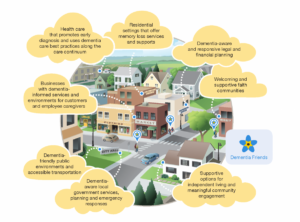
“It feels so isolating.” This is a common refrain I hear when talking to family care partners of persons living with dementia.
In surveys, support groups, and personal conversations, spouses, partners, and adult children caring for someone living with dementia express the need for a variety of services, especially for social and emotional supports. …
Changing the way people think, act, and talk about dementiaRead More »

We’re revisiting an interview Lisa Mayfield, founder, principal and care manager at Aging Wisdom, did with Suzanne Newman of Answers for Elders back in early 2020 on an evergreen topic: Family dynamics and caring for a parent living with dementia. …