
The pandemic has provided many lessons, including the importance of our communities, the value of the place we call home, and what steps to take to protect and care for our mental, physical, and emotional well-being.
All these factors play essential roles in our overall health, happiness, and ability to remain independent.
Perhaps this is why the Administration for Community Living has chosen to focus on “aging in place—how older adults can plan to stay in their homes and live independently” for Older Adults Month 2022. This year’s theme is “Age my way!”
In a recent AARP Home and Community Preferences Survey, 77 percent of adults over age 50 expressed a preference to remain in their current home if possible—what is commonly referred to as “aging in place.”
It’s been our experience as Care Managers that those who age well and live well are the individuals who have planned well.
Here are eight tips to ensure a safe, supported, and healthy future:
Legal documents
Make this the first step. Not having basic legal documents in order can easily and unnecessarily complicate everything else. According to the National Academy of Elder Law Attorneys, these estate planning documents should be included in your legal planning:
- durable powers of attorney for health care
- durable powers of attorney for finances
- an advance health care directive to physicians (also referred to as a living will)
- a will
- anatomical gifts/burial instructions
Incapacitation for any reason puts the burden of decision making on others who may not be prepared for the responsibility. These important documents spell out your end of life wishes. They are legally binding and can relieve stress or a proxy’s concern about making the right choices.
Finances
Whether you plan to keep working or to retire and travel, it is important to understand the options for care down the road and the related costs. Knowing how your finances will support your future care goals is essential.
You also need to get a sense of how your finances might be impacted if we have a change in health. Aging Life Care Professionals like us (we are also known as geriatric Care Managers) can work with you to plan for and anticipate those costs.
No Place Like Home
Don’t wait for a crisis, such as a slip on a throw rug resulting in a broken hip (falls are the number one reason for emergency room visits for older adults) before making improvements or a change in residence.
Take a discerning look around. If you have a steep incline or stairs that are more difficult to navigate with each passing year, it may be time to move. Would a move make sense? Are you considering a senior retirement community?
Home adaptions are also a possibility and can be cost-effective: improved lighting, grab bars in bathrooms, a low- or no-barrier shower, removing rugs to reduce the likelihood of a fall. Check AARP HomeFit Guide for over 100 tips with room-by-room recommendations.
Health and Well-Being
Everyone has concerns about health as we age. Perhaps our memory isn’t as sharp as it once was. A family history of high cholesterol or cancer can cause worry. What can you do or change now to ensure a healthy future? How do we stay positive as we grow older?
Start with your primary care provider. Don’t forget your overall well-being: take stock of your nutrition, hydration, physical activity levels, intellectual and social engagement, sleep habits, alcohol consumption, and if you smoke, enroll in a smoking cessation program.
Community: Family, friends, neighbors, neighborhood, and city
Being able to draw on social networks of friends or family is shown to make an important contribution to general well-being and quality of life. Living in a community where you feel safe, that is affordable, and where your goals and needs are met is essential.
Transportation
Are you comfortable driving? Do you have someone who is able to provide rides? Having access to public transportation, ride share services, or living in a walkable, accessible community can make a huge difference in your mobility, as well as ability to access entertainment, social and community engagement, shopping, and health care.
Hire a Professional Advisor and Advocate
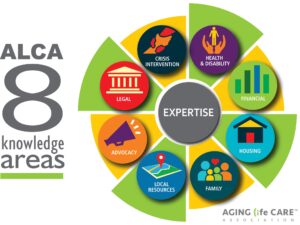
An Aging Life Care Professional can help you find the resources and supports you need to live well and grow older with confidence. Aging Wisdom has specific programs, including consultations for proactive planning. Our expertise and knowledge in these areas can provide you the tools and assistance to live a safe, supported, and healthy future.
Organize a “Go Bag”
These days, we never know when a crisis might hit (such as COVID, wildfire, earthquake). Prepare ahead by organizing a “go bag” in case you need to leave your home unexpectedly.
Having a “Go Bag” prepared in advance allows you take control of your life when your thinking is clear and nerves are steady. Contents of your bag should include:
- List of your important contacts, including your doctor
- List of your medications and medical problems
- Copy of your advance directive and power of attorney documents
- Copy of your insurance cards and ID
- Cell phone/tablet plus charger
Personal items: change of clothing, undergarments, socks, glasses, hearing aids with batteries, and other essential personal items
Knowledge and Planning are Empowering. Everyone should give these key areas serious consideration, reflection, and attention. If you find a gap in your planning, engaging the advice of an elder law attorney, financial advisor, and/or Aging Life Care Professional can be a smart investment in preparing for your health, happiness, and independence in your later years.
Don’t leave it to chance. Don’t leave it to family or friends to figure out. Start to prepare now. Planning today can safeguard happiness, health, and peace of mind. Are you ready?
Want help getting your plans in order? CLICK HERE to schedule a FREE get-acquainted call to determine together whether our services are a good fit for your needs.