

Author: Aging Wisdom

An advance directive is one of the most important planning documents you can create to ensure your healthcare wishes are followed if you can’t speak for yourself. Don’t wait for illness or old age to make one! Putting your wishes in writing now means that if an accident or sudden health event occurs, your values guide your care. An advance directive serves not only end-of-life decisions. It provides clarity and control and eases the emotional burden on those who care about you. …

If you are presently partnered, chances are that household duties and responsibilities—everything from running the dishwasher to managing finances—are split between you. That means that you might not be prepared to seamlessly take over should your partner be rendered incapable by a debilitating accident or disease, or even death. In other words, sudden singlehood.
As a proactive planner, you try to anticipate the needs of your later years. But not everything is predictable. Of course, it’s very difficult to contemplate losing someone you’re so close to. As the adage goes, hope for the best and prepare for the worst. No matter how the years roll out, you’ll feel more confident taking extra steps now so you’re ready to approach things solo should the need arise. …

Back by popular demand, it’s our Holiday Gift Guide—packed with thoughtful ideas to spark joy and make the season a little brighter.
Throughout the year our team gathers recommendations from clients, their families and friends, and our circle of trusted allied professionals. The result? A curated collection of gifts that delight, engage, entertain, and comfort. …
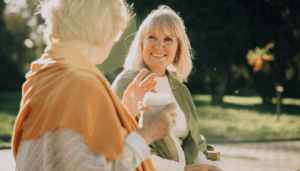
Longevity might just be less about strong medicine and more about strong connection to others. Research shows that having meaningful social ties is a good predictor of living longer and better. Social connections can help protect your heart, sharpen your mind, and boost joy and resilience. On the other hand, loneliness and the resulting emotional pain can activate your body’s stress response, just like physical pain. Loneliness is also associated with a higher rate of illness and premature death. If you aim for long-term health and independence, nurturing connection is essential. …

Exercise at this stage in life is less about pushing hard and more about protecting your independence and mobility. It’s about choosing the right kind of movement to support your energy, ease—and your joints. Being able to get up and down from the floor at age eighty doesn’t just happen. It takes intentional behavior now to meet your goals for later life. Regardless of whether you’ve always exercised or you’re just getting started, it’s never too late to review what you’re doing to keep your body moving. Even a few hours of activity a week can help keep your heart pumping, preserve muscle, and steady your balance. There are three key types of movement to incorporate in your life: …

Thanks to longer lifespans, retirement isn’t a short chapter. It might be close to a third of your life! It sounds so inviting: Life as a blank canvas, with long mornings, travel—a new kind of “freedom.” In fact, many retirees find that once the structure of work fades, they feel surprisingly unmoored. After decades of purpose-driven days, the stillness can feel disorienting. It is not uncommon for retirees to report feeling caught between relief and restlessness, and even some depression.
It helps, then, to reframe this life stage not as an end, but a beginning. Whether you’re retiring solo or with a partner, take time to reflect not just on what has been left behind, but on what you’d like to step toward. Think about what excites you, what gives your life meaning, and what might bring new connections. …

What is your role at Aging Wisdom?
What made you want to work in the field of aging? …

Research shows that many factors linked to dementia are within your control. While age and genetics play a role in developing the condition, lifestyle is a significant part of the puzzle. How you live today influences how sharp your mind will be tomorrow. …

With many older adults wishing to age in place, demand is growing for innovative housing options. An ADU—accessory dwelling unit—is a small, separate living space built on the same property as a single-family home. You may know them as in-law suites, granny pods, or casitas. ADUs offer flexible options as housing needs change over time. They can provide space to generate rental income, serve as a creative retreat, host visitors, or offer a private place for a caregiver. …

If you’re someone who plans ahead—you keep your finances in order, maintain your home, and map out your next chapter before embarking—you already understand the value of routine maintenance. The same principle applies to your health. And one of the determinants of health that’s often overlooked? The potential for chronic inflammation. …