

Topic: purpose

If you are caring for someone living with a progressive condition or a change in health or cognition, you have likely heard the phrase person-centered care.
Person-centered care is the foundation of our Creative Engagement program, which is built on the core values of purpose, respect, and exquisite listening. A person-centered approach focuses on an individual’s preferences, goals, and needs. This approach makes sure that individuals living with dementia or other health changes can take part in what they value and enjoy.
We extend invitations to participate. We do not assume to know what our clients want, and we involve our clients in decision-making as we tailor projects and outings to their preferences. We ask for feedback. We observe body language and make eye contact. We allow for feelings to be expressed and then validate those feelings. …

Thanks to longer lifespans, retirement isn’t a short chapter. It might be close to a third of your life! It sounds so inviting: Life as a blank canvas, with long mornings, travel—a new kind of “freedom.” In fact, many retirees find that once the structure of work fades, they feel surprisingly unmoored. After decades of purpose-driven days, the stillness can feel disorienting. It is not uncommon for retirees to report feeling caught between relief and restlessness, and even some depression.
It helps, then, to reframe this life stage not as an end, but a beginning. Whether you’re retiring solo or with a partner, take time to reflect not just on what has been left behind, but on what you’d like to step toward. Think about what excites you, what gives your life meaning, and what might bring new connections. …
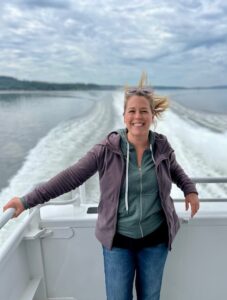
What is your role at Aging Wisdom?
What made you want to work in the field of aging? …

The foundation of Aging Wisdom’s Creative Engagement program is person-centered care, which is built with core values of purpose, respect, and exquisite listening1.
If you are a caregiver, a great start to person-centered care is centering yourself first. You’ve probably heard that caregivers need to take care of themselves to care well for their loved one. And it is true! By clearing your head before focusing on the person in your care and an activity, you are better equipped to meet them where they are and show greater patience. You can do this with a brief walk, a brisk dance to a favorite song, or intentional breathing. …
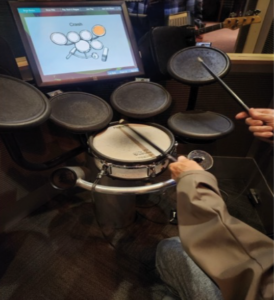
On any given weekday, my Creative Engagement colleagues are tapping into the richness of clients’ interests, histories, talents, and strengths. These intentional connections help reduce social isolation and loneliness, renew purpose, increase self-esteem, engage the senses, and spark joy. …
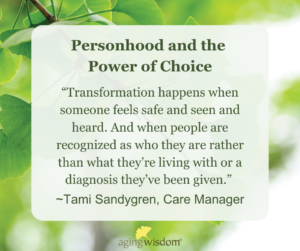
“Transformation happens when someone feels safe and seen and heard. And when people are recognized as who they are rather than what they’re living with or a diagnosis they’ve been given,” reflects Tami Sandygren, Care Manager.
Tami’s insights in this week’s Wisdom Wednesday podcast provide a thoughtful exploration of personhood, purpose, and ways to honor choice.
In his book Dementia Reconsidered: The Person Comes First (1997), Tom Kitwood first defined personhood in dementia as “a standing or status that is bestowed upon one human being by others in the context of particular social relationships and institutional arrangements. It implies recognition, respect, and trust.”
Personhood in dementia is concerned with treating people living with dementia with dignity and respect, in a manner that supports their sense of self. It focuses on treating the person living with dementia as a person first and foremost. Supporting personhood in dementia is the key goal of person-centered care.
Adapting to a family member’s memory changes gives you and your family a lot to think about. Our Certified Care Managers are experts at helping families make sense of and navigate the changes that come with Alzheimer’s and other dementias. CLICK HERE to schedule a call today to plan your best path forward.
Additional Resources

Study after study reveals that older adults with a sense of purpose, a sense of meaning in their lives, enjoy greater well-being and live longer than those without a life focus. They also have better cognitive and physical health and suffer less from depression, suggesting that purpose is an important component of a healthy and satisfying elderhood.
To explore possibilities for yourself, try this simple two-step process. …