

Editor’s Note: We use pseudonyms and other narrative elements in our stories and case examples to safeguard the identities and privacy of our clients.
Dementia impairs cognitive functions like memory, reasoning, and emotional regulation. These brain changes can cause anxiety in a person living with Alzheimer’s or another dementia who is struggling to understand their world.
Recognizing and soothing anxiety in someone living with dementia requires a compassionate, patient, and individualized approach. Calming the nervous system involves moving the body from fight, flight, and freeze responses into a state where breathing and heart rate is regulated and the nervous system calms down.
Creative Engagement Specialists (CES) are knowledgeable and experienced in anxiety-calming activities which support a decrease in anxiousness and an increase in joy and well-being.
Time in nature, seeing and creating art, reading, being read to, or reciting poetry, gentle exercise and deep breathing sessions, playing or listening to music, reminiscing, humor and laughter, exposure to beauty through visuals, sounds, and scents, are all powerful tools to help create ease and calm. Gentle touch, compassionate listening, and creating a safe space to build trust are also impactful ways of calming down the body and mind and help relieve anxiety.
What might anxiety look like when someone is living with dementia?
- Repetitive questions
- Difficulty sleeping
- Pacing
- Withdrawing from regular activities
- Restlessness, agitation, worry or fear such as sundowning later in the day
New or the sudden onset of worsening anxiety can sometimes signal a medical problem. Underlying causes might include:
- Hunger, thirst, needing the bathroom
- Pain or discomfort, such as a UTI
- Fatigue or poor sleep
- Too much noise, stimulation, activity, or unfamiliar surroundings
- Medication side effects or medication changes
- Illness
When anxiety is evident, we implement person-centered and tailored strategies such as:
- Observing, identifying, and addressing situations that may trigger anxiety such a noise, crowds, a loud television, or disruptive activity
- Recognizing and addressing any pain, discomfort, or other underlying issues that may exacerbate anxiety
- Providing one-on-one attention, validation and offering reassurance in a calming and quiet environment
- Staying calm, speaking slowly and with a gentle tone
Mary experiences extreme anxiety and only feels validated if what she asks for is being taken care of immediately. My visit time with her includes a lot of affirming that things are being taken care of and that her wishes and current desires are being tended to. Gentle touch on her arms or a hug of reassurance helps calm her down. I also intentionally talk very quietly and slowly to her and work to change her focus to something that she feels joy around rather than something she is worried or anxious about.
- Incorporating routine and familiar activities that bring a sense of calm and joy such as music, hobbies, and sensory activities
 Sally often displays anxiety by way of increased and audible shallow breathing and agitation. She is someone who loves being outside in nature but after a recent fall and surgery, in addition to cognitive decline and psychological impairment, was unable to walk or get outside. She was agitated and refusing to eat. During my visit, we took a walk (with her in her wheelchair) and found a beautiful, quiet space near windows where she could look outside, see trees, and feel the sunlight. We found a book and I read quietly to her. From time to time, I gently touched her arm. Within minutes she calmed down and when asked, even smiled and said she was enjoying the story.
- Creating a safe, engaging space that encourages a sense of control, choice, empowerment, and personal autonomy
 When I arrived for our visit, Dale was adamant about leaving his adult family home and was experiencing increased agitation and frustration. It was clear he was very upset as he was aggressively stuffing his personal belongings into suitcases. I didn’t feel it was safe to get into my car and go on our usual outing, so I suggested we take a walk together. I listened, validated his feelings, and let him know it was OK to be upset and that we could work on finding a solution to whatever it was that was bothering him. This helped relieve some agitation in the moment, made him feel that his feelings were valued, and he was being heard.
Here are some strategies we use to prevent anxiety before it starts: Keep a predictable daily rhythm and routine:
- Plan adequate time for transitions; no rushing
- Identify and avoid known triggers
- Encourage regular meals, hydration, and movement
- Balance and pace activity to the individual client
 Char enjoys her solitude, independence, and autonomy; however, she needs almost full-time care to ensure she stays safe and her basic needs are being met. For her, validation of how she prefers to live is important (i.e. aging in place in her home). She doesn’t like a lot of people coming into and out of her space or dictating what she does or what she should do. So, our visits are lowkey, and we talk and reminisce. This conversational approach is powerful and life-enriching for her. She loves to talk about her family, stories about growing up, and her creative and artistic pursuits. Visits where there is no agenda to accomplish a task are often the visits when she thanks me, looks me in the eye, and says she really enjoyed my visit. We are actively working on a memoir book project together, however I’m always cognizant of how she feels that day and whether in the moment she feels up to work on her book or would rather just visit or sit together on her deck and people and bird watch.
- Maintain familiar surroundings and routines where possible
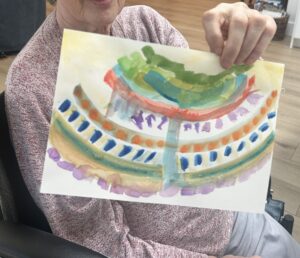 Marge loves to leave her Adult Family Home for outings that include cheeseburgers, coloring, and a scenic drive. The consistency of our outings helps manage her anxiety and abate feelings of wanting to “go back home.” Most weeks I plan to take her to a new restaurant to try their burgers. I bring a coloring book and markers so she can work on something creative, but nothing too challenging. These activities are things she enjoys and meet a basic need for meals while also adding in something art-related which for her is a calming and joy-inducing activity.
When anxiety is evident, our goal is to reduce it by nurturing a safe, familiar presence through patience, routine, clear communication, and maximizing comfort. We center each client relationship with kindness, calm, reassurance, and focused on the individual client.
Interested in learning how a Creative Engagement Specialist can enrich the day of someone in your care? Click here to schedule a get-acquainted call today to explore how we can bring joy, calm, and enhanced well-being.