
In an age of screens, notifications, and tiny computers in our pockets, our directed attention is depleted daily. You know the feeling: your mind wanders, you slow down physically, and you feel mentally fatigued.
The prescription to restore your mood and cognition? Nature.
In his book Nature and the Mind: The Science of How Nature Improves Cognitive, Physical, and Social Well-Being(Simon Element, 2025), Dr. Berman provides evidence of how time with nature, even a stroll in your neighborhood, is good for body and mind.
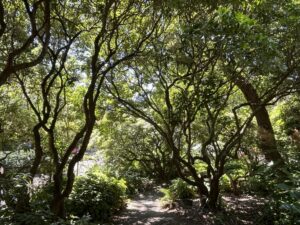
Dr. Berman’s “A Walk in the Park” study found that nature walks boosted working memory and attention performance significantly – a 20% increase in attention-related abilities.
Importantly, you don’t even have to enjoy the walk or enjoy nature to benefit. If you are safe and comfortable, your directed attention is restored.
At Aging Wisdom, through our Creative Engagement program, we understand the many benefits of nature-based activities and outings. Tailoring nature experiences for our clients is common in our practice. Whether it is visiting a Seattle park, smelling rosemary bedside, or taking a scenic drive through the trees, we know nature is restorative.
Our work is rooted in helping others live well, care well, and age well.
Benefits of the Outdoors
The American Psychological Association (APA) encourages spending at least two hours per week out in nature to benefit both your physical and mental  health. You will reap the benefits whether your two hours outdoors are done in one block of time or broken into smaller outings. Just 20 minutes spent in nature reduces stress!
When we encounter plants, water, other natural elements, it reduces our adrenaline, blood pressure, and heart rate. Other benefits to our physical, mental, and cognitive health include:
- Boosts immune system, regardless of the weather, including increased Vitamin D exposure, which is good for the immune system
- Enhances cognitive function, short- and long-term, as well as sparks creativity, piques curiosity, refocuses attention, and inspires awe
- Improves heart health, including slowing heart rate and reducing blood pressure
- Promotes better sleep quality, regulates circadian rhythms
- Reduces stress and cortisol (stress hormone) levels
- Encourages physical activity
- Supports mental health, improves mood, and reduces anxiety and depression
Ideas to connect with nature
All time outdoors counts. Any green space is better than spending no time in nature. Take advantage of what is around you. Slow down and notice leaf movement, birds flying, and patterns in tree bark.
Other ideas to consider (additional local suggestions at article end):
- Start small: A 5-minute walk can boost mood. A 10-minute walk after a meal can help stimulate digestion and help stabilize blood sugar.
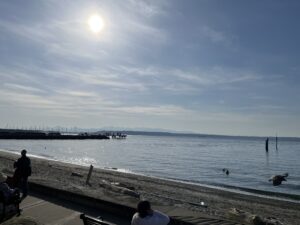
- Explore your neighborhood. Look for parks, vistas, and trails that you may not have visited before. Even time spent in your own backyard can be amazing.
- Volunteer for a community organization, local park, or environmental club: You’ll get outside, meet like-minded people, and build community.
- Discover an outdoor hobby: Birdwatching, gardening, fishing, bicycling, and beachcombing can encourage and motivate you to be outside.
- Bring nature in: indoor plants, nature photos, listening to birdsong or waves, all provide benefits if nature is physically out of reach.
- National Park Photos & Multimedia: webcams & sound library
- Nature live cams: visit Explore Livecams
Clients Engaging with Nature
Our Creative Engagement team positively impacts clients’ lives by tapping into their experiences, interests, and strengths by tailoring visits to clients’ goals and needs.
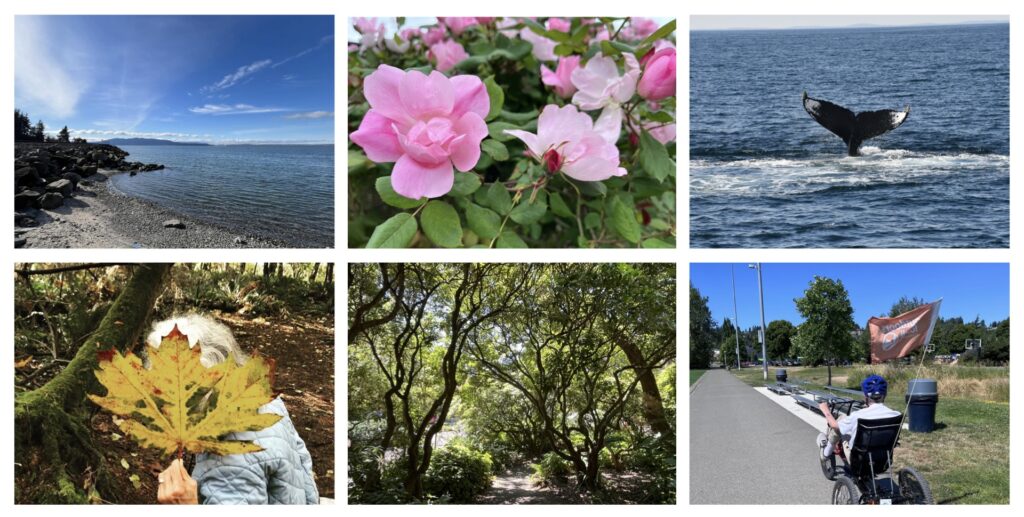
Mary lives with advanced dementia. Mary mostly stays in bed, is legally blind, and nonverbal. Mary’s Creative Engagement Specialist (CES) knows that the beach is one of her favorite places. Her CES regularly brings beach treasures to her visits, including driftwood, shells, flowers, and herbs to engage the senses. With sensory items, Mary can still enjoy her beloved outdoors. This reduces her anxiety and agitation, while also piquing her lifelong curiosity and improving her quality of life.
An afternoon drive for water views came with an added stroke of luck for our client, Julie. An excerpt from Sonia’s CES visit summary captures their awe: “… all was interrupted by the most beautiful sight, a tail fin dipping in the water followed by clearly a huge whale, which was so effortlessly splashing in and out of the water, gliding through in front of us, we pointed at the water, speechless, people around us started to jump up and down, soon, we were all screaming at the joy of watching such magnificent creatures. She was overjoyed and said it was her first time having such a close encounter with a whale. The experience was electrifying; on our way back, we acknowledged how fortunate we were to live in the PNW.”
Salem shares this CES visit note from a recent outing: “After enjoying the view of Elliott Bay by the Discovery Park Lighthouse, we stop to look at a sign about harbor seals. We take turns narrating the seals’ voices. Our visits are full of imaginative play like this. We break into laughter, unencumbered by needing to find the right words and finding connection in shared creativity, silliness, and allowing ourselves to exist in the present.”
We also love to weave the arts and outdoors together whenever we can, as both have lasting value. This powerful connection between nature and art making 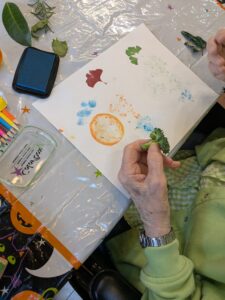 was the inspiration for our Nature Art Making activity, which you can download here. This activity is age- and dementia-friendly.
With summer on the horizon, outdoor concerts are client favorites. The Seattle Parks Foundation Pop-Up Concerts in the Park kick off in July; link below!
Need some support and guidance to get outdoors and explore? Click here to schedule a get-acquainted call to explore how our Creative Engagement program can help.
Greater Puget Sound Regional Opportunities for Getting Outdoors
- Seattle Parks Foundation Pop-Up Concerts in the Park (July & August)
- Cascadia Forest Therapy public sessions calendar
- TRACKS outdoor adventure programs through the City of Bellevue
- UW Center for Urban Horticulture
Additional Reading and Discovery
- Get Outdoors to Enhance Well-Being (Aging Wisdom blog article)
- The Healing Power of Nature (Aging Wisdom blog article)
- The Art of Connection (Aging Wisdom blog article)
- Trip Tips for Older Travelers (Aging Wisdom blog article)
- Powered by Connection as We Age (Aging Wisdom blog article)