

Topic: care management

Falls among older adults continue to be a national public health concern. Fall-related injuries are the most common reason for visits to the Emergency Department by adults 65 and older. Falls remain the leading cause of injury or death for older Americans.
It is Falls Prevention Awareness Week, a nationwide observance sponsored annually by the National Council on Aging in partnership with the Administration on Community Living. Their objectives are to raise awareness on preventing falls, reducing the risk of falls, and helping older adults live without fear of falling.
This year’s theme is From Awareness to Action. …

Falls are multifactorial: involving, or dependent on several factors or causes. There are a number of possible contributors to falls that we often overlook that are essential to overall health, mobility, balance, and independence.
From our experience as Care Managers, we know how important it is to schedule regular check-ups, especially as we age. There can be a ripple effect if we aren’t careful. Vision, hearing, and foot care all play key roles in health maintenance and fall risk prevention. Our eyes, ears, and feet also support our ability to get regular exercise. And regular exercise can contribute to so many positives: strength, balance, overall well-being, appetite, mental acuity and cognition, a good night’s sleep. …
Falls Prevention (3/4): More Pearls of Wisdom for Health and IndependenceRead More »

Feeling truly seen and heard helps to build trust and relationship, and contributes to aging well, caring well, and living well.
Our Care Managers and Creative Engagement Specialists are incredibly adept at the powers of observation, asking questions, actively listening, making connections, learning about the person in front of them, and being in the moment. Each conversation provides opportunity to know a client more personally, find ways to add to their quality of life, and enhance well-being. …
Person-Centered Support and the Power of ListeningRead More »

Our work as Care Managers may be focused on the well-being and quality of life of one person, our client, but it requires understanding and looking at the whole picture.
What is the whole picture? It includes everything in the client’s life: health (and disability), family systems and dynamics, goals, preferences, personal history, finances, values, legal, housing, services & supports, and what brings joy and meaning.
Knowing the whole person, the whole picture, helps us to better guide families as they navigate options for aging well, caring well, and living well.
Additional Reading
- What is Aging Life Care?
- Get in the Lifeboat: Don’t Float Alone! Key Supports You’ll Want in Your Boat
- Alzheimer’s and the Family Caregiver
- Medical Emergencies: Are you prepared?
Could you benefit from the guidance of a Care Manager who looks at the whole picture? Click here to schedule a get-acquainted call and to determine together whether our services are a good fit for your needs.
This is an excerpt of a longer conversation between Lisa Mayfield, Aging Wisdom’s founder and principal, and Laura Vaillancourt on her Life on Repeat podcast.
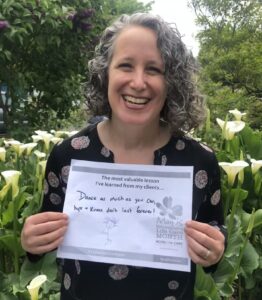
We have a lot to celebrate this month. In addition to May being National Aging Life Care Month and Older Adults Month, our colleague Wendy Nathan celebrates ten years with Aging Wisdom!
If you are familiar with our team, you know our paths to Aging Life Care are varied, but we share a mutual mission: To inspire hope through creative solutions so our clients live well, care well, and age well.
As Wendy shares in this episode of Wisdom Wednesday, she has had a rich career, starting as a hospital respiratory therapist and in research. She then went back to school to become a massage therapist and worked predominantly with older adults.
Her work with older adults prompted a fascination with how different people age, their attitudes toward aging, and how massage and the power of touch allowed her clients to live more full lives.
This eventually led to pursing a Certificate in Gerontology through the University of Washington Professional & Continuing Education program and working at Aging Wisdom, first as a companion (what is now known as our Creative Engagement program) and eventually as a Certified Care Manager.
Want to learn more about Aging Life Care and how it can be of benefit to you? CLICK HERE to schedule a FREE get-acquainted call to determine together whether our services are a good fit for your needs.
Additional Reading:

Concerns about an older parent’s well-being are normal. Striking the right balance between supporting independence and ensuring safety can be a struggle for adult children. One of the most common reasons adult children reach out to us is when a parent, who obviously needs help, refuses it.
When we see changes in our parents, it’s usually a sign that something has shifted. …
When Your Parent Refuses Help: How to move forwardRead More »

Every client has a rich personal history. As an Aging Life Care practice, our Care Managers understand the value of learning about each client as an individual. It aids us as we help clients and their families navigate the best options for aging, caring, and living well.
Whenever there’s an opportunity to return to what brings a client joy, we’ll go there in some capacity. …
Each seed is a story: Care Managers get to know each client as an individualRead More »

Our Aging Life Care Professionals, AKA Care Managers, wear many hats: team member, navigator, diplomat, advocate, collaborator. Additionally, the services and supports they provide are not cookie cutter solutions, but tailored to each client’s needs, finances, and goals. …
The Role of a Care Manager: Team Member, Navigator, Diplomat, Advocate, CollaboratorRead More »

It is probably one of the toughest conversations you’ll ever have: you would rather talk about finances and death with your parents than ask them to retire the car keys.
Why is it so hard? Americans prize self-sufficiency. Driving is deeply connected to our sense of independence and freedom. On the practical side: without a car, your parents will have trouble getting places. Opportunities to socialize will be tricky too.
Though an emotionally charged topic, it’s counterproductive to postpone tough conversations. Keep in mind, it’s more important to avoid accidents or death than to avoid talking about unpleasant and difficult topics. …

Every situation has its own variables, just as each family has its own system and dynamics. This can often rank at the top of obstacles to providing the support an aging parent may need.
Risk assessment and risk tolerance play a part as well, especially if the person in your care is living with Alzheimer’s or another dementia. …
What are some of the obstacles to helping someone?Read More »
- « Previous
- 1
- 2
- 3
- 4
- Next »