
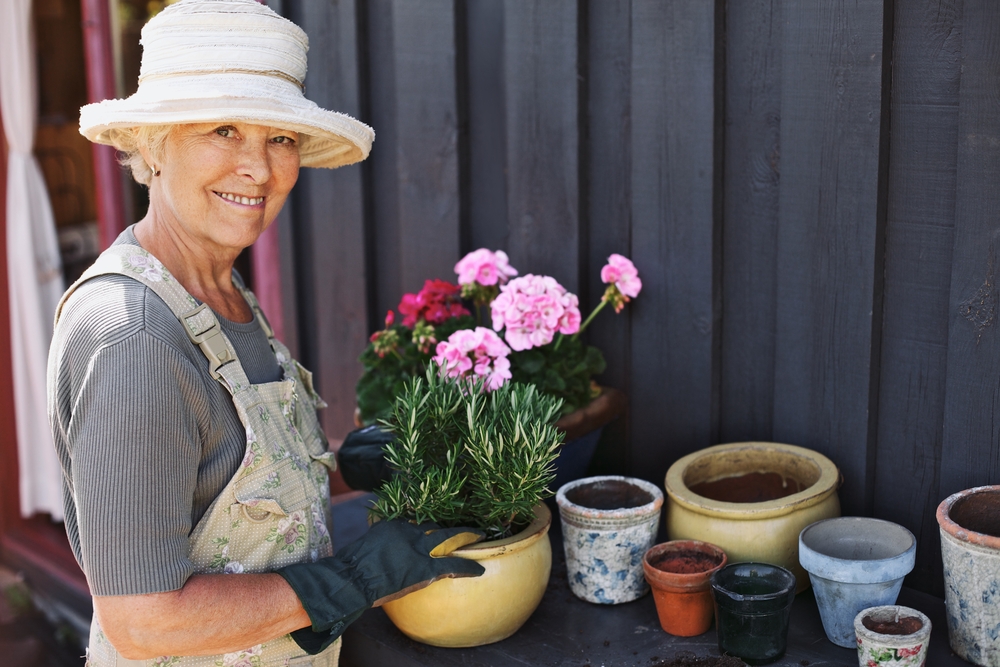
Art can be created and experienced in many forms. Dance. Collage. Painting. Drumming. Pottery. Singing. Acting. Writing. Gardening. Knitting. Poetry. Sewing. Storytelling. Drawing. Even cooking.
The effect of experiencing or making art when living with dementia can be profound. We see this every day in our work as Creative Engagement Specialists and Care Managers.
Susan H. McFadden, PhD, dedicated an entire chapter in her most recent book, Dementia-Friendly Communities, to the arts and artists in dementia-friendly and inclusive communities. The arts, as Dr. McFadden demonstrates, offer limitless opportunities for participation, communication, self-expression, and meaningful connection. “[P]eople with dementia can contribute to the wider community through their creativity—they do not need to remember, because they can still imagine.” 1
Participation in the arts, according to the National Coalition of Creative Art Therapies, contributes to “improving communication and expression” and “increasing physical, emotional, cognitive, and/or social functioning.”2
Here at Aging Wisdom, we love to enrich our clients’ lives through the arts. We are also fortunate in the greater Seattle and Bellevue areas to have access to arts engagement programs that are dementia-friendly and -inclusive. I’ve included links to area programs at the end of this article.
Some activities may seem mundane or unartistic but are far from that. Each incorporates creativity on the part of client-participants and aids in making meaningful connections, inspiring joy, a sense of purpose, and contentment.
Examples include:
Baking. Nothing smells quite as welcoming as cookies or bread baking. The baking process can elicit beautiful memories, anticipation in the preparation, and joy in the eating.
Embrace the senses of taste and smell. Slather a slice of that freshly baked bread with some butter and jam. Enjoy a cup of coffee or a glass of milk with an oatmeal cookie. Have fun decorating butter cookies with sprinkles, frosting, candies.
My colleague Keri had a grandmother who was an exceptional baker. As her Alzheimer’s progressed, baking become more difficult, though she enjoyed the activity and welcomed her granddaughter’s assistance. Together they would measure and mix the ingredients, with her grandmother sharing special family baking secrets and stories in the process. At the end, they’d enjoy freshly brewed coffee, cookies hot from the oven, and a deeper connection.
Coloring books have grown in popularity and there’s a broad array of choices. Fancy markers and colored pencils can make coloring mandalas, garden, forest or mountain scenes a delight. The act of coloring can be soothing, almost meditative.
Our Creative Engagement Specialists have used the activity of coloring to initiate a conversation and reminiscence. One client, who grew up in Kansas, had a love for sunflowers and enjoyed telling stories of how they are called that because the flowers follow the path of the sun, east to west, throughout the day. She also enjoyed using all the oranges and yellows to color the petals. Crayola has free printable coloring pages for adults you can download.
Chocolate Party. Several years ago, a former colleague, Linda, had a client who was particularly fond of chocolate. They would have a chocolate party. The party was an opportunity to indulge the senses, celebrate the client with her favorite treat, and create an event around the savoring and enjoyment of chocolates. Before these visits, Linda would do homework about the origins of the chocolates they’d be enjoying that day, and together they would enjoy the flavors, study the history, and learn about each unique chocolate. Each tasting would evoke beautiful tales from the client of her many travels, of books she’d read, of jobs she’d held, and people in her life. It was often a profound experience.
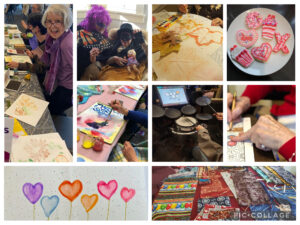
Watercolor painting or collage. Painting and collage are enjoyable art forms. You can also combine watercolor and collage to make a composition. There are no wrong ways to go about making art here. With collage, it’s amazing what can happen with a glue stick, a stack of magazines, a brush, a tray of watercolor paints, and a packet of markers. Compositions stir conversation.
Reading. Poetry beautifully resonates with so many. Favorite poets include Mary Oliver and Robert Frost. Coffee table books with vivid and large images  tied to a clients’ interests are a great way to connect. Reading aloud from a favorite memoir can spark beautiful reminiscence and dialogue.
One colleague used to visit the library regularly with a client who was an avid gardener. Though the client’s gardening pursuits had slowed as her dementia progressed, my colleague would spend time pouring over the beautiful coffee table books about gardening with this client, which lead to great conversations.
Gardening. In addition to the reading example above, the client’s son also invested in a small gardening cart for his mother’s patio. Together, my colleague and her client would dig in the dirt and repot plants they’d purchased at a local nursery. A visit to a gardening center is another wonderful outing, filled with opportunities to engage the senses.
Music. Projects like Music & Memory understand the power of music to enrich listeners. We love creating playlists for our clients and many enjoy music playing in the background when we visit. Others love to sing, perform, attend concerts at the symphony, opera, musicals, or performances of their  favorite artists. Listening to music is a powerful reminiscence tool. Singalongs are also an inspiring and joyful way to express emotion.
Dance. Or simply enjoy the music! Do what feels comfortable. If balance is a concern, movement in a chair can be a great option. Moving shoulders, arms, hands, upper body, and head to the beat of favorite music can be a subtle, comfortable way to get in some exercise. Act like a symphony conductor. Pantomime along to the words of a song. Dress in costume and become a character.
Other activities that bring delight:
Visit a hair salon or barber shop. Getting your hair washed and a scalp massage is relaxing for many of us. A manicure and/or pedicure offer other opportunities for a soothing hand or foot massage, and some pampering. Selecting nail or hair colors can be a creative endeavor.
Scenic drives. A drive through a familiar neighborhood or down a street, a visit to the waterfront or beach, a trek to take in a favorite mountain view (you can take in great urban views of Seattle, Elliott Bay, and Mt. Rainier from Kerry Park in Queen Anne) or field (such as the Tulip or Lavender Festival) can be a great connector.
I had a client who grew up on a farm and loved to visit a local orchard in fall so she could pet animals and bring home a pumpkin and apples. Those orchard visits always brought back comforting memories, the sharing of a rich tapestry of stories, and a deeply satisfying day outdoors in the country.
Another client lived in the Cap Hill neighborhood all her adult life but had grown up in West Seattle. A colleague who worked with her loved to hear her stories of growing up there as she lives in West Seattle herself. One day they ventured on a field trip to visit the client’s old neighborhood. Her childhood home, elementary school, and the parks she loved are still there. My colleague took pictures of their field trip and printed the pictures. They later made a memory book of the day. The client keeps that book on her bedside table and refers to it often.
The possibilities are endless. Engage the senses. Encourage the use of muscle memory. Don’t be afraid to try something unusual. Have fun! As Dr. McFadden reminds us “Through the power of the arts, people of all ages, artistic abilities, and cognitive status can come together to tell their stories, laugh and cry together, and experience the joy of celebrating the human spirit of people living with dementia regardless of how advanced the dementia might be.”3
Interested in learning how a Creative Engagement Specialist can enrich the day of someone in your care? Click here to schedule a free, get-acquainted call today to explore how we can bring joy.
ENDNOTES
- McFadden, S. (2021). Dementia-Friendly Communities: Why We Need Them and How We Can Create Them.London, UK: Jessica Kingsley Publishers, p. 173.
- nccata.org
- McFadden, S. (2021), p.186.
Dementia- and Age-Friendly Programs and Activities
King County:
- Elderwise
- Frye Art Museum Creative Aging Programs
- Greenwood Senior Center
- Momentia Seattle
- Seattle Parks & Recreation, Dementia-Friendly Programs
- SilverKite Community Arts
- The Memory Hub
South Snohomish County: