
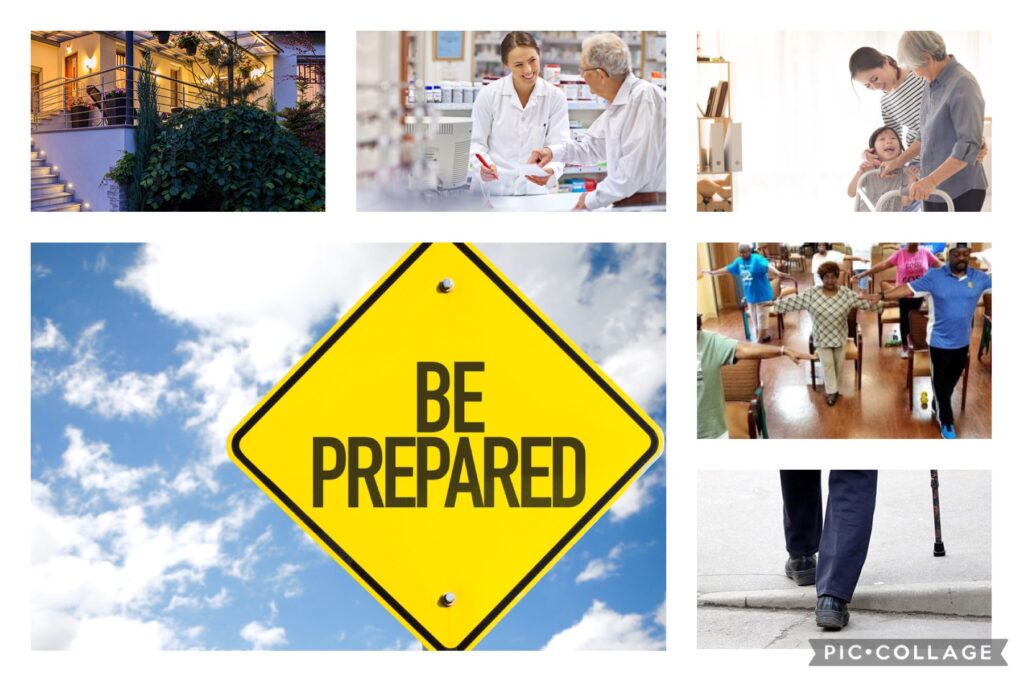
As we transition from summer to fall, the seasonal change serves as a good reminder to brush up on Fall Prevention. Preventing and reducing the risk of falls, and helping older adults live without fear of falling is essential.
Falls remain the leading cause of injury and death for people age 65+. Implementing fall prevention steps can go a long way to improve safety and support independence.
Fortunately, most falls can be prevented. Understanding the common factors that cause or contribute to falls is a good place to start:
Environment – inside and out: Many of us have lived in our homes for years and haven’t given much thought to making home modifications that support safety and minimize fall risk. The average home is not designed to support us as we grow older.
Fall-proof your home by improving lighting; installing handrails and grab bars; keeping indoor and outdoor walkways and pathways free of clutter and other tripping hazards; and modifying your kitchen and bathroom to optimize safety. Every improvement makes a difference. Here are some resources and ideas to get you started:
- Age-friendly bathroom remodels
- Adding smart home safety features
- Age-friendly exteriors
- NCOA’s 18 Steps to Fall Proofing Your Home
- AARP’s HomeFit Guide
Vision and Hearing: Get both checked annually and follow your healthcare provider’s recommendations. The health of your eyes and ears are important to keeping you on your feet. Vision and hearing changes often occur gradually, and regular exams help monitor and address these changes. As we age, our vision changes can make some objects more difficult to see, thus becoming tripping hazards and obstacles. If hearing is impaired, we may not hear pets, warnings such as car horns, or the voices of others.
Exercise Regularly: Inactivity as we age can cause muscle weakness, and balance and coordination issues, which can contribute to falls. Regular physical activity contributes to muscle strength, flexibility, and better balance. It also helps toimprove mood, confidence, and mobility. If you are not currently engaged in regular physical activity, make it a priority to check with your healthcare provider for recommendations. Your overall fitness will help lower your risk of a fall. And if you do fall, better fitness will likely mean you’ll experience less injury and recover faster.
Check your local senior and community centers, municipal recreation departments, and the “Y” for classes. Engage a friend to join you as you’re more likely to regularly attend classes or walking groups by encouraging one another.
- Seattle Parks and Recreation Department’s Lifelong Recreation webpage
- Health & Wellness programs offered at the Greenwood Senior Center, as well as at
- The Center for Active Living (formerly the Senior Center of West Seattle)
- SouthEast Seattle Senior Center
Stay Hydrated. Drink plenty of fluids to avoid dehydration, which can affect balance. Hydration: How Much Water Should You Drink Every Day?
Medications: Some over-the-counter (OTC) and prescription medications have side effects such as dizziness and dehydration, or cause interactions with other medications that can contribute to a fall.
A review of your medications with your healthcare provider or pharmacist for side effects or interactions that may affect balance or coordination is key. It is also important to understand how some medications may react with alcohol and non-alcoholic drinks as well as certain foods. You may find this article informative as well, Medication Safety Tips for Older Adults.
Proper Footwear and Assistive Devices: Wear proper-fitting, nonslip shoes and slippers. Avoid walking in socks or barefoot, as this can lead to slips. According to Dr. Eric B. Larson, a leading researcher and expert in the science of healthy aging, most falls are caused by slipping, not tripping. The safest shoes have laces or Velcro fasteners and nonslip soles. His recommendation is to find a good tennis shoe. He also recommends avoiding high heels.
Use walking aids, such as a cane or walker, and grab bars if needed to provide extra support and stability. Getting the right equipment and using it properly are key.
How Can a Care Manager Help? A Care Manager can:
- Evaluate your risk factors by reviewing your health history and recent illnesses/falls/diagnoses.
- Provide a home safety assessment, help you plan necessary home modifications, and assist with environmental adjustments.
- Look at equipment needs for safety in the home such as grab bars, stair glide, and handrails. Help with selecting and properly using assistive devices such as a walker, fall detection device, and/or health management tools such as a medication organizer.
- Guide you on resources to assist you at home with transportation, chores, and meals.
- Help arrange assistance with personal hygiene needs.
- Work with you and your healthcare provider to implement services such as physical or occupational therapy, medication management, and in-home assistance.
- Assist with coordinating in-home care.
- Connect you with community resources to help keep you active and engaged.
Be Proactive. Be Vigilant.
Taking these steps and engaging the support of your healthcare provider, family, and friends can go a long way in lowering your risk of a fall. Be proactive. Be vigilant. Always assess possible risks and address issues before they result in injury or serious harm.
Click here to download Fall Prevention Tips to Lower Your Risk fact sheet.
Could you or someone in your care benefit from a home assessment to help reduce the risk of falls at home? We can help! Schedule a free, get-acquainted call today to talk with one of our certified Care Managers.