


Having concerns about your parents’ health and well-being as they age is normal, yet incredibly stressful. As an adult child, it is also common to struggle with striking the right balance between supporting your parents’ desire for autonomy and ensuring their safety.
According to AARP, approximately 42 million adults provide uncompensated care to an adult age 50 or older, many of whom are part of the Sandwich Generation. Sandwich Generation is a term used to describe individuals who are “sandwiched” between raising children and simultaneously caring for aging parents.
Some may not identify as being a family caregiver. But if you are worrying about your parents, noticing changes, doing research behind the scenes, starting to manage even small tasks on their behalf, or dropping in more often for oversight, you are indeed in a caregiving role.
Being a family care partner or caregiver, regardless of circumstances, requires navigating unfamiliar territory such as the healthcare system, understanding options for care, housing, and other supports, learning new terms, refining time management, approaching difficult and emotional conversations, all while trying to manage your own life and priorities.
Where do you begin?
Be curious and get educated. Seek reliable sources for information. With knowledge comes confidence. Find effective strategies to facilitate uncomfortable conversations with your parents about their health, safety, and long-term care planning. Check out our blog and podcast to get started.
Believe in yourself. Caregiving isn’t a perfect science. It is new territory for most of us, especially if a parent has complex health or memory changes. You have your parents’ best interests at heart, so trust in your ability to assist them.
Strengthen your support network. Ask for help. Don’t carry the responsibility alone. Enlist support from family, friends, and neighbors, as well as from professionals such as in-home caregivers and Aging Life Care professionals.
Find time for rest and self-care. Caregiving without a break is not sustainable. Find ways to care for yourself while you are caring for others. Self-care isn’t selfish, it’s essential. Take regular breaks to rejuvenate yourself emotionally, physically, and mentally.
Connect with others on a similar journey. While there are plenty of ways to care for yourself, being part of a family caregiver support group is often an overlooked part of a healthy self-care plan. A support group is a safe place to share and work through challenges, as well as find practical advice, comfort, and even humor.
 How do you prepare?
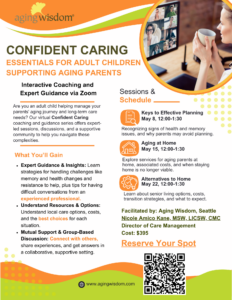
Register for Confident Caring: Essentials for Adult Children Supporting Aging Parents, a 3-part virtual caregiver coaching series that starts May 8. Confident Caring is a road map to assist you in navigating the journey ahead.
Confident Caring will provide you with practical tips, essential tools, professional guidance, coaching, and insights within a nurturing community. You’ll gain the knowledge you need to transition from feeling overwhelmed to feeling empowered, helping your parents navigate changes and plan for the future—all while maintaining your own well-being.
Additional Resources