

What is your role at Aging Wisdom?
What made you want to work in the field of aging? …
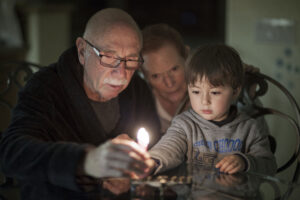
The year-end holidays are here and often include get-togethers with family and friends, lively conversation, good food, gift exchanges, and festive merrymaking.
For someone living with Alzheimer’s disease or another form of dementia, however, the activities, engagement, and added stimulation can be disorienting. The holidays can also interfere with daily routines, causing stress and confusion. Individuals who are experiencing cognitive change often do best when their environment and schedule are relatively predictable. …
How to make the holidays more dementia-friendly and -inclusiveRead More »
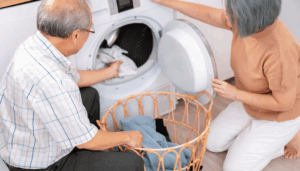
If you are presently partnered, chances are that household duties and responsibilities—everything from running the dishwasher to managing finances—are split between you. That means that you might not be prepared to seamlessly take over should your partner be rendered incapable by a debilitating accident or disease, or even death. In other words, sudden singlehood.
As a proactive planner, you try to anticipate the needs of your later years. But not everything is predictable. Of course, it’s very difficult to contemplate losing someone you’re so close to. As the adage goes, hope for the best and prepare for the worst. No matter how the years roll out, you’ll feel more confident taking extra steps now so you’re ready to approach things solo should the need arise. …

Back by popular demand, it’s our Holiday Gift Guide—packed with thoughtful ideas to spark joy and make the season a little brighter.
Throughout the year our team gathers recommendations from clients, their families and friends, and our circle of trusted allied professionals. The result? A curated collection of gifts that delight, engage, entertain, and comfort. …

What is your role at Aging Wisdom? Creative Engagement Specialist
What made you want to work in the field of aging?
I appreciate the accumulated wisdom and insights of older people, and I have always gravitated toward older adults, even when I was a kid. Growing up, my dad used to always point out how people were often dismissive of old people or talked to them like they were children. He helped me see that this bias was everywhere, and I didn’t want to be like that. From a young age, I sought out elders I could learn from, who I could look up to. I was drawn to the Creative Engagement position at Aging Wisdom because I wanted to be part of a team devoted to decreasing isolation and loneliness in older adults, while also encouraging the unique power and perspective that elderhood can bring.
…

My friend Betsy Fitzgerald, care partner to a lung transplant survivor with metastatic cancer, recently shared an update: “I’ve been mending my life, Kintsugi, patching broken pieces together. It is not easy; some pieces are sharp edged, some not quite fitting, some missing. We do the best we can.”
Her role as a care partner comes with recognizing the need for self-care. And part of self-care has been acknowledging her need for “patching,” hence the Kintsugi reference.
Kintsugi is a Japanese art form that teaches us to repair the broken pieces, making us stronger and more resilient than before. It can symbolize hope, healing, and lead to a new kind of beauty. How might we apply the art of Kintsugi to the caregiver journey? …
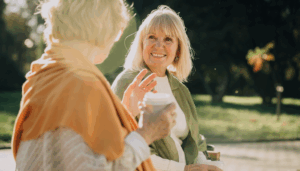
Longevity might just be less about strong medicine and more about strong connection to others. Research shows that having meaningful social ties is a good predictor of living longer and better. Social connections can help protect your heart, sharpen your mind, and boost joy and resilience. On the other hand, loneliness and the resulting emotional pain can activate your body’s stress response, just like physical pain. Loneliness is also associated with a higher rate of illness and premature death. If you aim for long-term health and independence, nurturing connection is essential. …

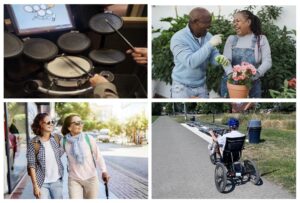
If you are caring for someone living with a progressive condition or a change in health or cognition, you have likely heard the phrase person-centered care.
Person-centered care is the foundation of our Creative Engagement program, which is built on the core values of purpose, respect, and exquisite listening. A person-centered approach focuses on an individual’s preferences, goals, and needs. This approach makes sure that individuals living with dementia or other health changes can take part in what they value and enjoy.
We extend invitations to participate. We do not assume to know what our clients want, and we involve our clients in decision-making as we tailor projects and outings to their preferences. We ask for feedback. We observe body language and make eye contact. We allow for feelings to be expressed and then validate those feelings. …

Nearly one-third of adults who are 55 and older are aging solo, navigating aging without a life partner or children. Top of mind for many solo agers is who will advocate for them when they need assistance.
Proactive planning is essential. …